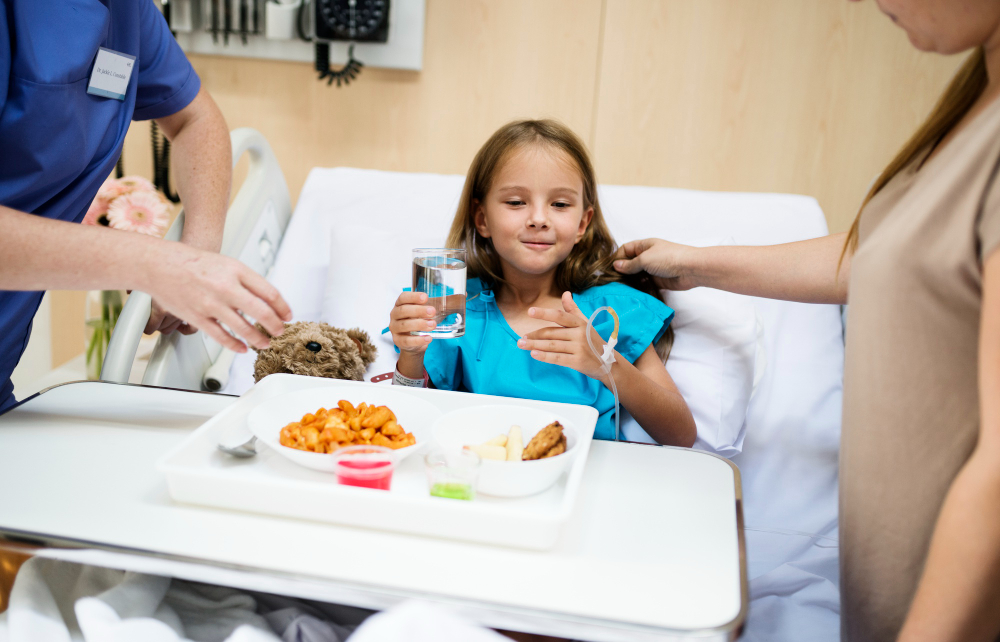


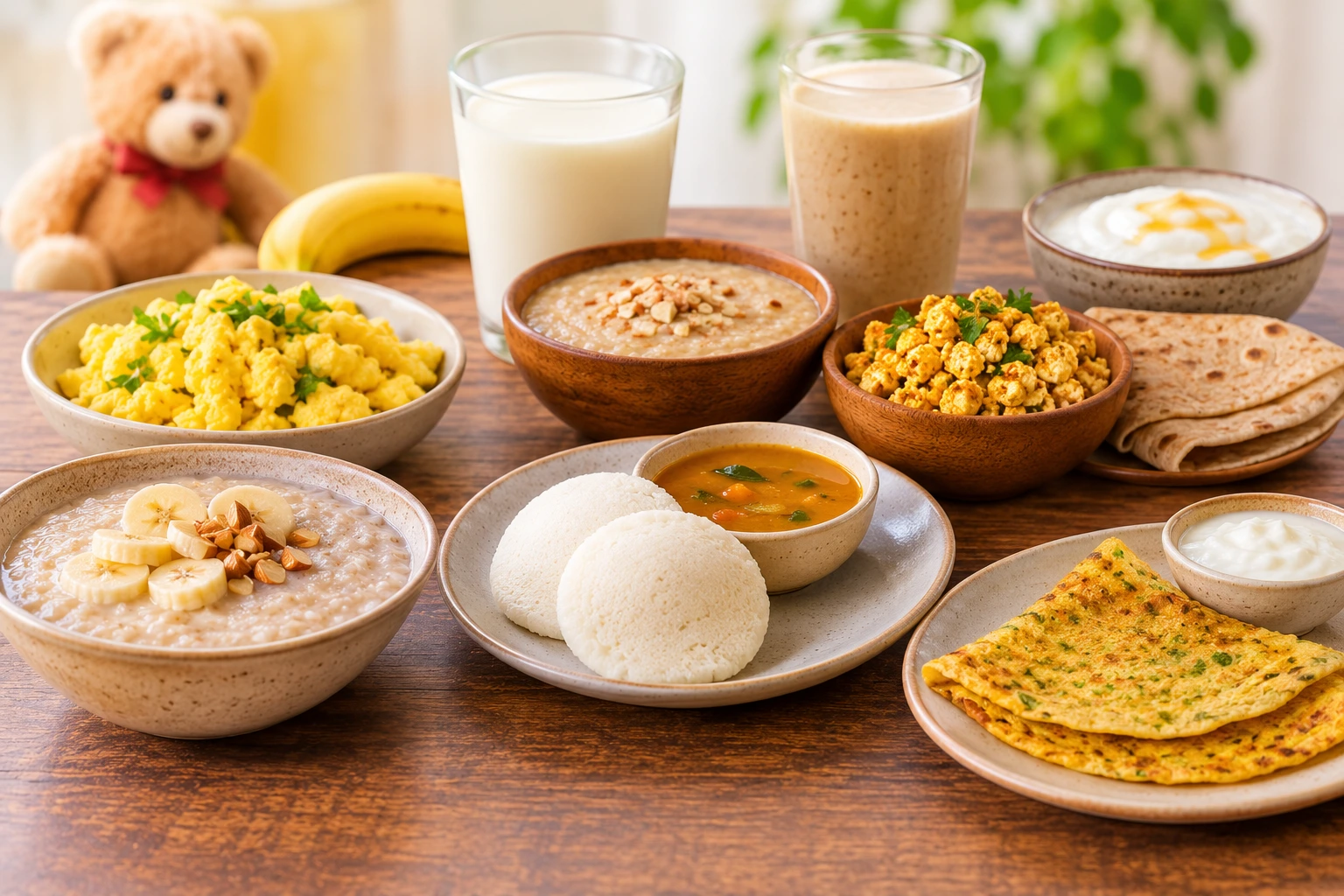
When 9-year-old Basavaraj arrived at a partner hospital in Manipal, he was too weak to eat on his own. Diagnosed with Burkitt’s Lymphoma, he had already lost significant weight. His mother Manjula — who had left their home in Hebballi, Karnataka to stay by his side through every hospital visit — faced a question that thousands of mothers in her situation face every day: what do I feed him?
It is one of the most practical and urgent questions in paediatric cancer care. Breakfast, in particular, matters enormously. It is often the window of the day when a child in treatment has the most appetite, before nausea and fatigue build through the day. Getting it right means choosing foods that are soft, calorie-dense, high in protein, and familiar enough that a child will actually eat them.
Cuddles Foundation’s FoodHeals Program works with children like Basavaraj across 50 hospitals in India, building personalised meal plans grounded in what Indian families actually have access to.
Here are ten high-protein Indian breakfast options, with nutritional values per serving, so parents know exactly what each meal provides.
Note: Nutritional values are approximate and vary based on recipe, portion size, and preparation method. Values are drawn from USDA FoodData Central and ICMR Indian Food Composition Tables (2017). All serving sizes are for a child’s portion, smaller than standard adult servings.
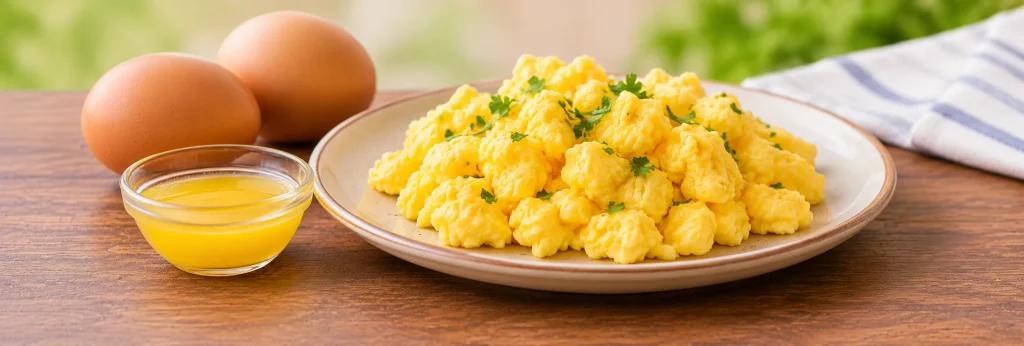
1. Scrambled Eggs with Ghee (2 Large Eggs + 1 tsp Ghee)
| Nutrient | Per serving (~130g) |
| Calories | ~220 kcal |
| Protein | 13g |
| Calcium | 80mg |
| Iron | 1.6mg |
Eggs are one of the most complete protein sources available — providing all nine essential amino acids needed for tissue repair and immune function during treatment. Scrambled gently with a teaspoon of ghee, they are soft, require minimal chewing, and are well tolerated even with mild mouth soreness. The ghee adds fat-soluble vitamins and additional calories.
For children who find plain eggs unappealing due to taste changes during chemotherapy, adding a small amount of mild cheese or mixing into soft upma can help. Two large eggs provide 13g of protein, one of the highest protein contributions of any breakfast on this list.
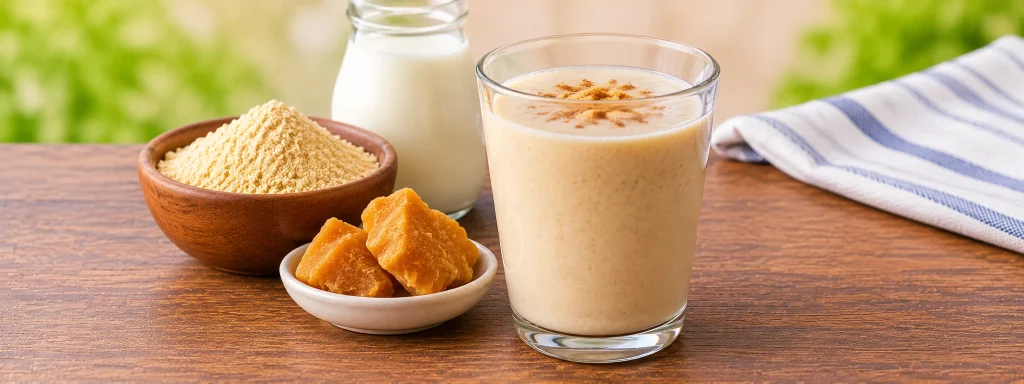
2. Sattu Porridge with Jaggery and Warm Milk (30g Sattu + 200ml Full-Fat Milk + Jaggery)
| Nutrient | Per serving (~250ml) |
| Calories | ~280 kcal |
| Protein | 12g |
| Calcium | 310mg |
| Iron | 2.8mg |
Sattu — roasted gram flour, traditionally consumed in Bihar, Jharkhand, and eastern UP — is one of the highest protein flours in the Indian kitchen, providing approximately 20g protein per 100g dry weight. A 30g serving stirred into warm full-fat milk with a small piece of jaggery provides a smooth, easy-to-drink breakfast requiring no chewing at all ideal for children with mouth sores or severe fatigue.
The full-fat milk contributes additional protein, calcium, and calories. Jaggery provides iron and natural sweetness. This is among the most protein-dense liquid breakfast options available to Indian families. or families from regions where sattu is not traditional, roasted ragi flour (finger millet) makes an excellent substitute with similar nutritional properties.
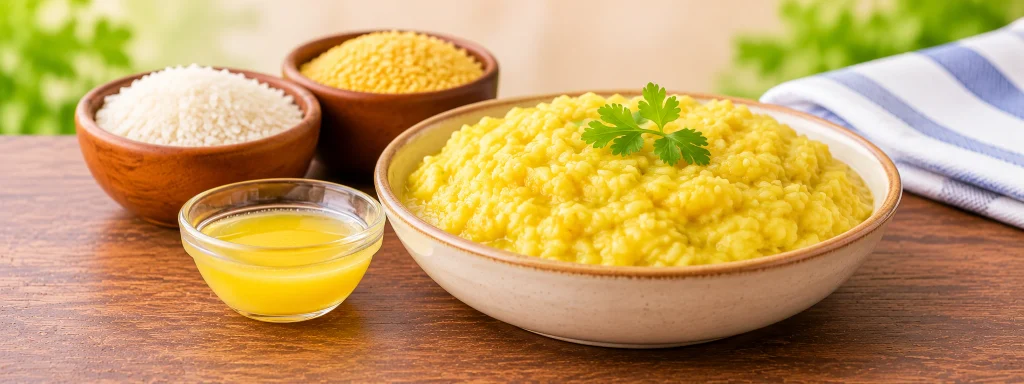
3. Moong Dal Khichdi with Ghee (30g Moong Dal + 30g Rice + 1 tsp Ghee)
| Nutrient | Per serving (~200g cooked) |
| Calories | ~250 kcal |
| Protein | 9g |
| Calcium | 35mg |
| Iron | 1.2mg |
Moong dal khichdi is the most widely recommended recovery food in Indian paediatric nutrition — easy to digest, soft, complete in protein and carbohydrate, and familiar to children across most Indian states. A teaspoon of ghee stirred in increases caloric density without increasing volume.
Moong dal (split, husked) is the most digestible of all Indian lentils, making it particularly appropriate for children experiencing treatment-related gut sensitivity. When cooked thinner, it doubles as a warm soup for children who cannot manage solid food. Protein content can be boosted significantly by adding a soft-boiled egg on the side.
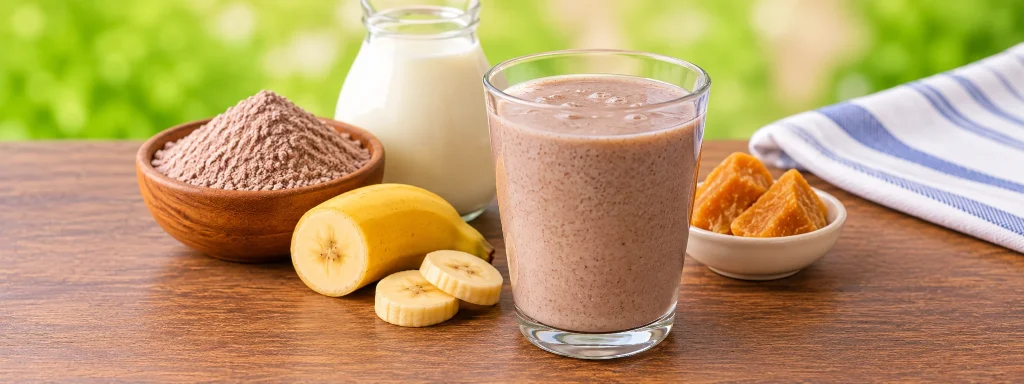
4. Ragi Porridge with Full-Fat Milk, Banana and Jaggery (40g Ragi Flour + 200ml Full-Fat Milk + ½ Banana + Jaggery)
| Nutrient | Per serving (~280g) |
| Calories | ~300 kcal |
| Protein | 10g |
| Calcium | 280mg |
| Iron | 2.2mg |
Ragi (finger millet) is nutritionally exceptional for one reason above all others: calcium. At 344mg calcium per 100g raw grain — more than ten times the calcium content of white rice — ragi is the single most calcium-rich grain available in the Indian kitchen, and calcium matters enormously for children whose bone health is at risk from prolonged steroid use during cancer treatment.
Cooked into a smooth porridge with full-fat milk (which contributes additional calcium and protein), mashed banana (potassium and natural sweetness), and a small amount of jaggery (iron), this is a nutritionally dense breakfast in a small, easy-to-drink volume. It is naturally gluten-free.
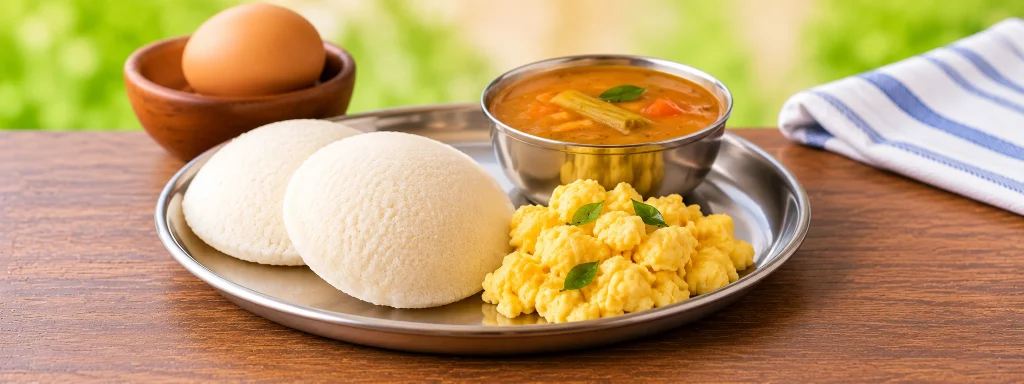
5. Soft Scrambled Eggs and Idli with Thin Sambar (2 Idlis + 1 Egg + 100ml Thin Sambar)
| Nutrient | Per serving (~250g) |
| Calories | ~230 kcal |
| Protein | 14g |
| Calcium | 65mg |
| Iron | 2.0mg |
Plain idli alone is not a high-protein breakfast — two pieces provide only about 5g protein. However, paired with a soft scrambled egg and a small bowl of thin sambar (which adds 3–4g additional protein from toor dal), this combination reaches 14g protein in a soft, easy-to-eat, culturally familiar breakfast.
Idli is steamed, not fried, and fermented — making it gentle on the digestive system and providing mild probiotic benefit. The combination is particularly practical for South Indian families who may find other breakfast options less familiar.
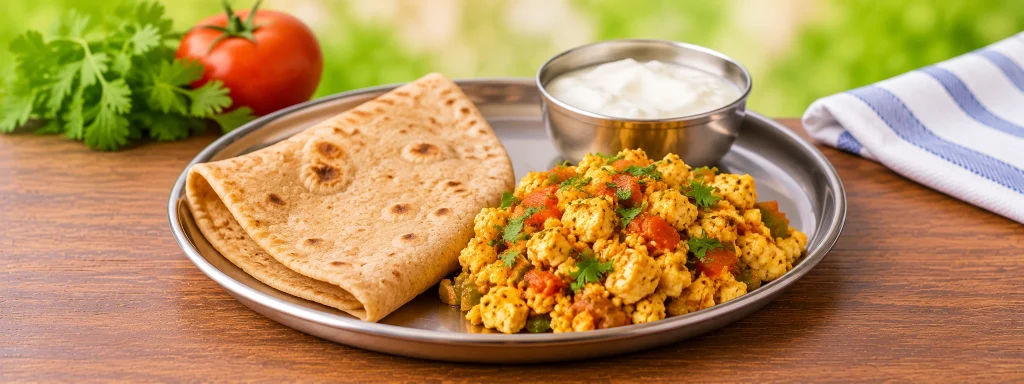
6. Paneer Bhurji (Scrambled Cottage Cheese) with Soft Roti (50g Paneer + 1 Small Soft Roti)
| Nutrient | Per serving (~130g) |
| Calories | ~260 kcal |
| Protein | 13g |
| Calcium | 220mg |
| Iron | 0.8mg |
Paneer is one of the highest protein dairy foods available in the Indian kitchen — providing approximately 18–20g protein per 100g. A small portion of paneer bhurji (scrambled with mild spices, no onion or garlic if the child is sensitive, cooked very soft) paired with one small, soft whole wheat roti provides 13g protein and 220mg calcium in a breakfast that most Indian children will recognise and accept.
For children who find strong flavours difficult during chemotherapy, paneer cooked plain — simply crumbled and warmed with a little ghee and a pinch of turmeric — is a mild, high-protein option that does not overwhelm taste-altered palates.
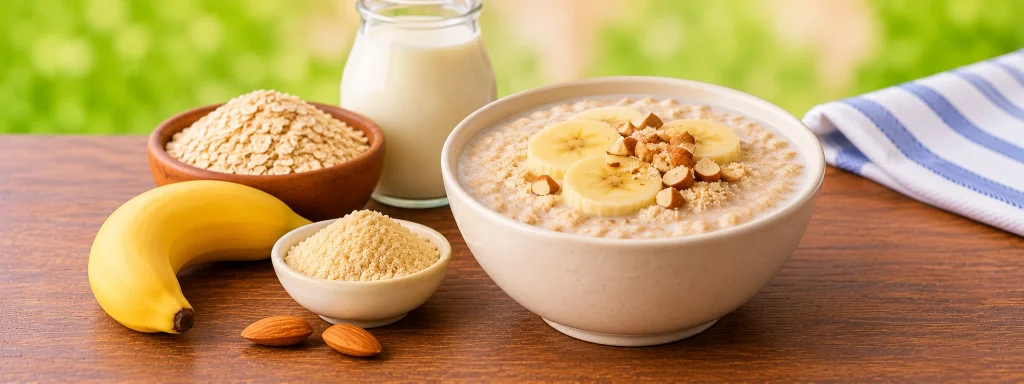
7.Oats Porridge with Full-Fat Milk, Almond Powder and Banana (40g Oats + 200ml Milk + 10g Almond Powder + ½ Banana)
| Nutrient | Per serving (~300g) |
| Calories | ~320 kcal |
| Protein | 12g |
| Calcium | 270mg |
| Iron | 1.8mg |
Rolled oats cooked with full-fat milk until very soft provide soluble fibre for gut health and slow-release carbohydrates for sustained energy. Adding a teaspoon of ground almond powder significantly increases protein, healthy fat, and calorie content without changing the texture.
The mashed banana adds sweetness, potassium, and calories without adding volume. This combination reaches 12g protein and 320 kcal in a single, easy-to-eat bowl. For children who find the texture of oats unappealing, blending the cooked porridge smooth removes the texture concern entirely.
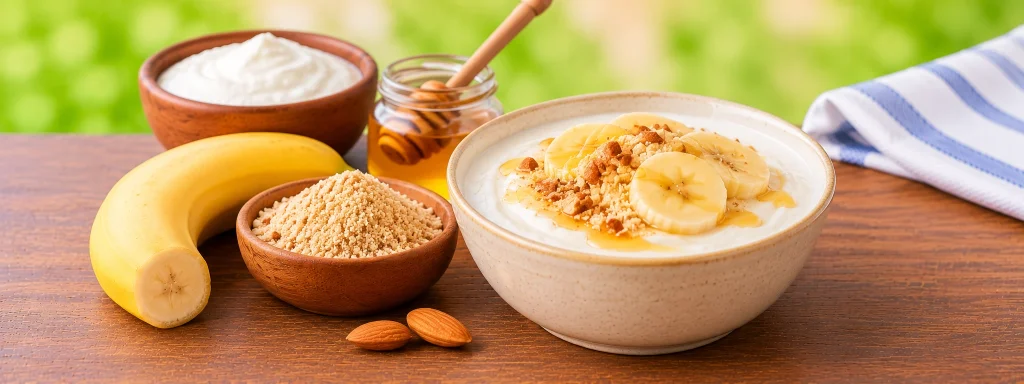
8. Curd with Mashed Banana, Ground Almonds and Honey (150g Full-Fat Curd + ½ Banana + 10g Ground Almonds + 1 tsp Honey)
| Nutrient | Per serving (~200g) |
| Calories | ~230 kcal |
| Protein | 8g |
| Calcium | 220mg |
| Iron | 0.5mg |
For children with mouth sores or throat pain — common side effects of chemotherapy and head/neck radiation — cold curd is one of the most physically comfortable breakfast options available. It requires no chewing, its cool temperature soothes inflamed tissue, and its probiotic content supports gut health disrupted by treatment. Served with mashed banana, ground almonds, and a small amount of honey, it becomes calorie and protein-dense enough to function as a meaningful breakfast rather than a snack. This is also one of the fastest options to prepare on days when a caregiver is exhausted.
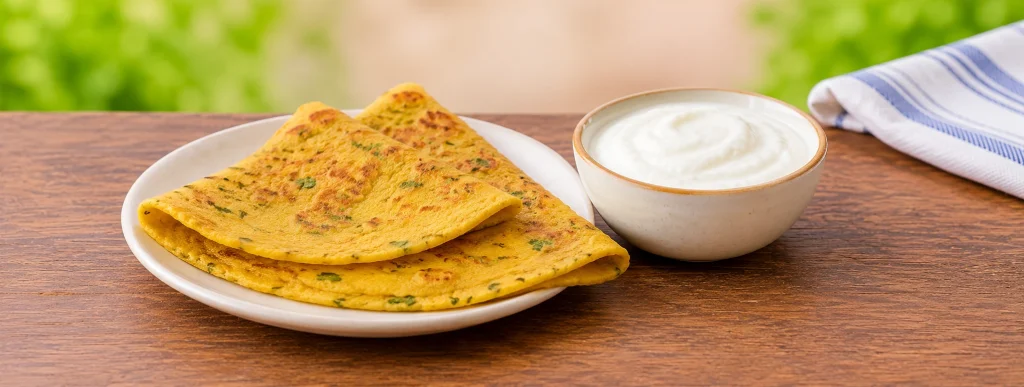
9. Moong Dal Chilla with Curd (2 Small Moong Dal Chillas + 100g Curd)
| Nutrient | Per serving (~180g) |
| Calories | ~250 kcal |
| Protein | 14g |
| Calcium | 140mg |
| Iron | 1.8mg |
Moong dal chilla — thin savoury pancakes made from soaked, ground moong dal — are one of the highest protein Indian breakfast foods that can be made at home without requiring the child to eat large volumes. Two small chillas made from 60g dry moong dal provide approximately 10–11g protein. Paired with 100g full-fat curd (3.5g additional protein), the combination reaches 14g protein.
The chillas should be made very thin and soft — not crispy — to minimise the chewing effort required. They can be served plain or with a very mild, thin chutney. For children in regions where chilla is not a familiar food, thin moong dal dosas achieve a similar nutritional profile.
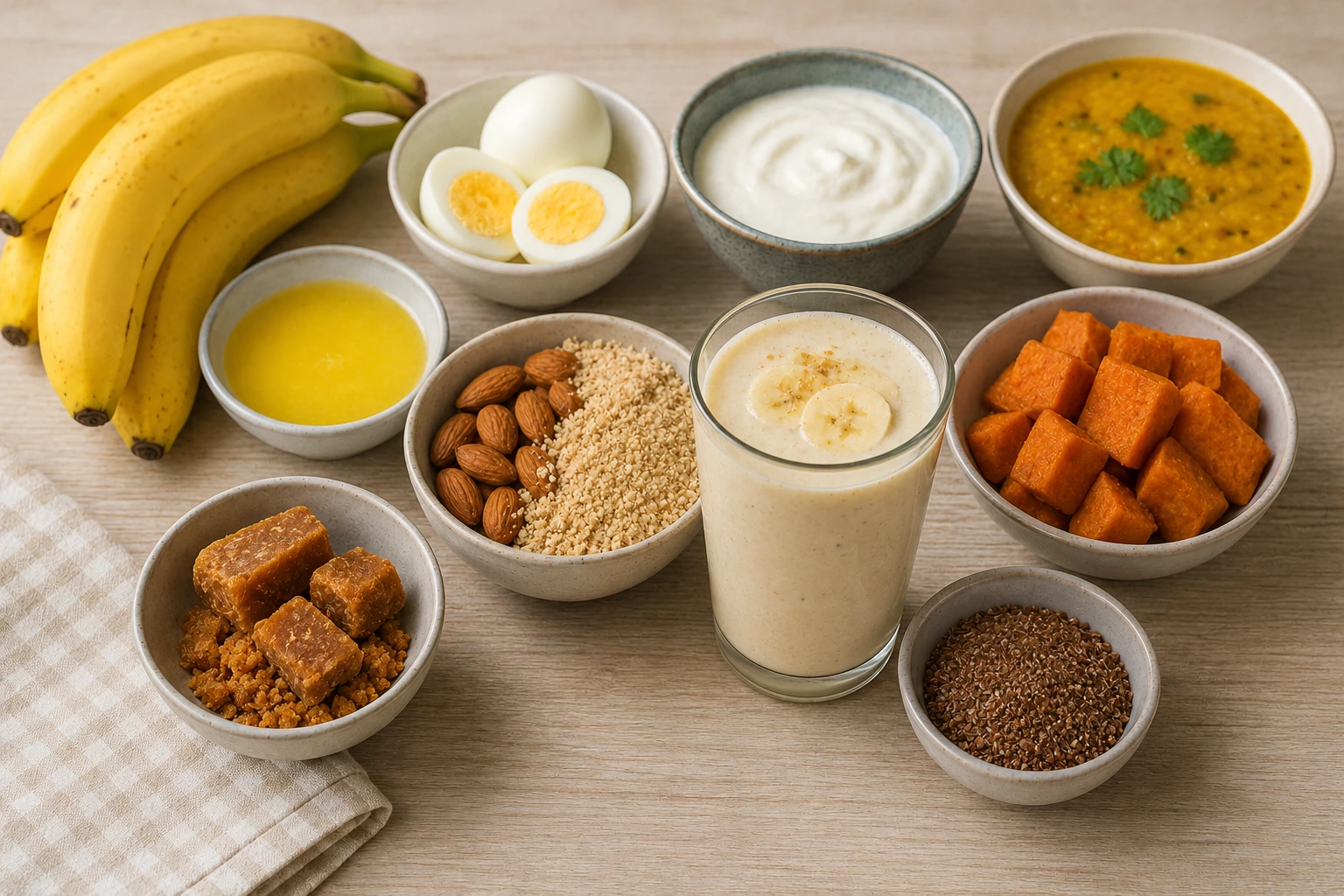
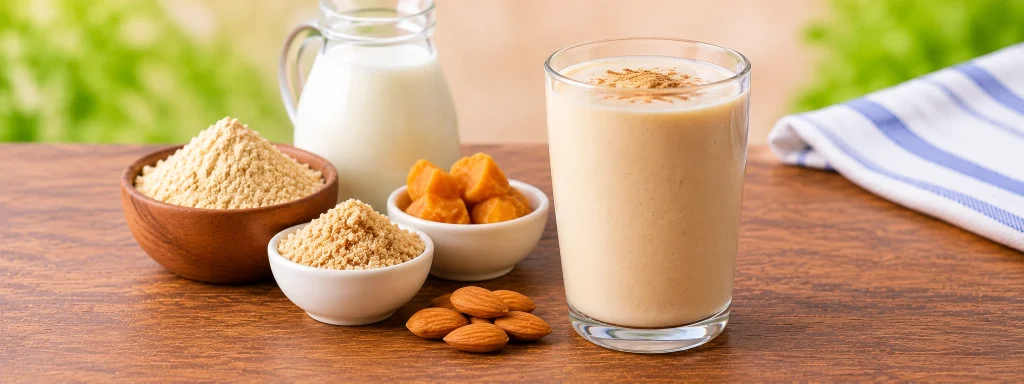
10. Fortified Warm Milk with Sattu, Almond Powder and Jaggery (200ml Full-Fat Milk + 20g Sattu + 10g Almond Powder + Jaggery)
| Nutrient | Per serving (~250ml) |
| Calories | ~270 kcal |
| Protein | 11g |
| Calcium | 290mg |
| Iron | 2.0mg |
On the days when a child simply cannot eat — when nausea is high, mouth sores are painful, or fatigue makes any effort at the table impossible — a glass of warm fortified milk can provide 270 kcal, 11g protein, and 290mg calcium in a form that requires no chewing and minimal effort to consume.
This is the minimum viable high-protein breakfast: something nutritious the child can manage even on their hardest days. The combination of sattu (20g protein per 100g dry) and almond powder makes this a genuinely high-protein drink, not merely a calorie source.
Important Notes for Parents
These serving sizes are for a child in treatment, smaller than standard adult portions. A child whose appetite is very poor may manage only half a serving on difficult days. The goal is consistency: small amounts frequently, rather than large amounts infrequently.
Food safety is critical. Children undergoing chemotherapy are immunocompromised. All food should be freshly prepared and served immediately. Avoid raw or undercooked foods, unpeeled fruits that cannot be washed thoroughly, unpasteurised dairy, and food stored at room temperature for more than two hours.
These values are estimates. Actual nutritional content varies based on exact recipe, ingredients, brand, and cooking method. For a precise, personalised nutrition plan for your child, a trained paediatric oncology nutritionist is essential.
When these ideas are not enough. For children who are severely malnourished or unable to maintain adequate oral intake — as Basavaraj was at the start of his treatment — clinical nutritional supplements or tube feeding may be required. Cuddles Foundation’s FoodHeals Program places trained paediatric oncology nutritionists inside hospitals across India at no cost to families. Ask your oncologist about a referral.
Donate to help more children get the nutrition support they need.