

A story of persistence, patience, and a mother’s quiet resolve.
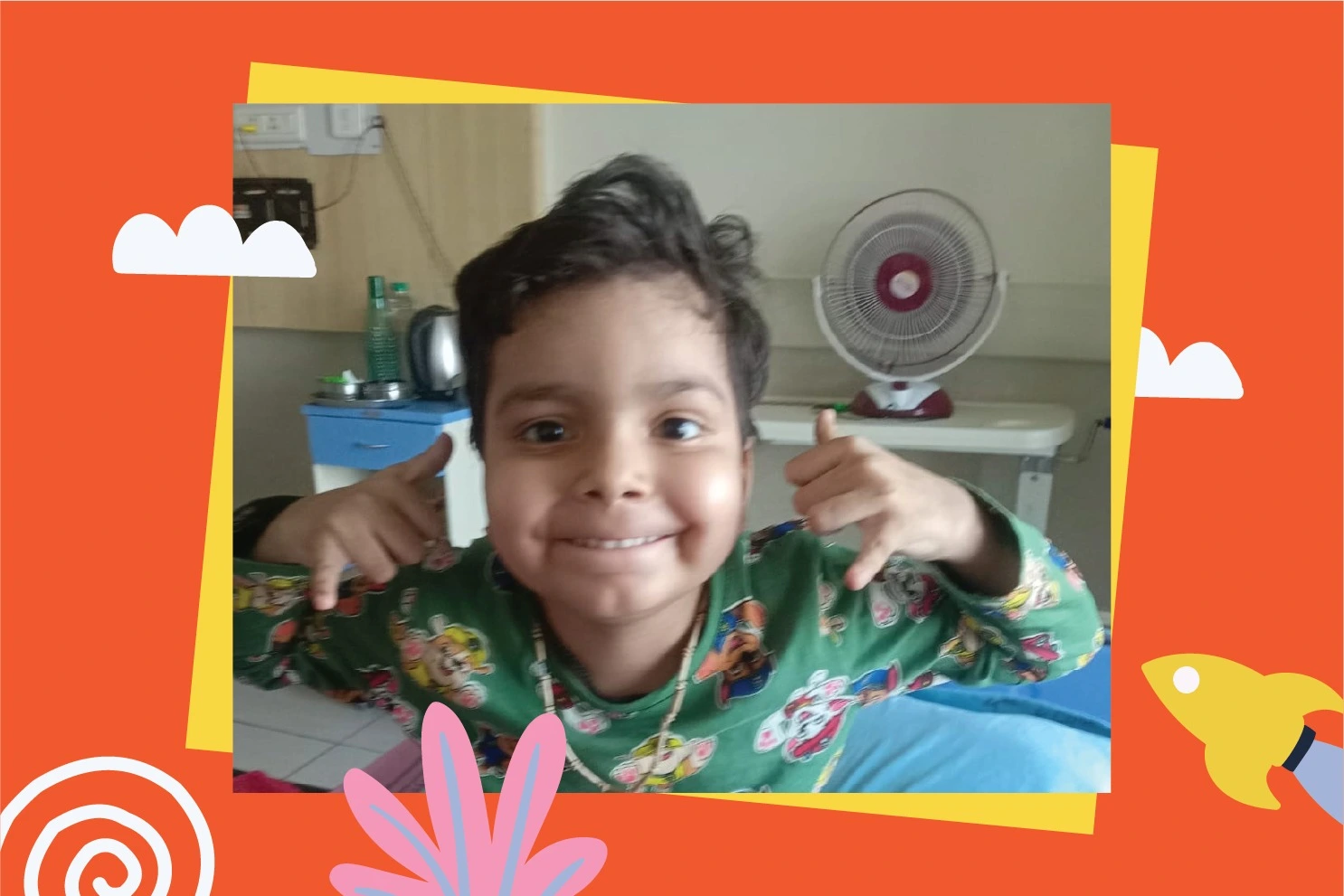
When Dev first arrived at our partner hospital, he could barely keep his eyes open. Diagnosed with B-cell Acute Lymphoblastic Leukaemia, the 5-year-old had already lost significant weight. His body showed signs of severe thinness, and his mother feared the worst.
The family had travelled from their hometown in a state of shock. It began with a routine blood test that showed critically low haemoglobin levels of just 4 g/dl, requiring an urgent transfusion. From there, doctors advised further tests, including ones the family had only heard about in connection with cancer.
Fear crept in. Confusion followed.
Dev’s father runs a small namkeen stall. His mother is a homemaker. There are four of them: Dev, his older sister, and their parents, now living in a city far from home. The diagnosis felt like the ground had shifted beneath them.
“There was a lot of confusion, fear, and uncertainty,” his mother recalls. “We didn’t know where to go or what to do.”
A relative guided them to the right hospital. But it was Dev’s grandfather who gave them the strength to continue. He said simply, “Aisi koi bimari nahi jiska ilaaj na ho.” There is no illness that cannot be treated.
Those words became their anchor.
At the start of treatment, Dev was eating very little. His appetite had all but disappeared, and his energy followed. The Cuddles nutritionist began working closely with the family, carefully planning diet charts, counselling his mother during hospital rounds, and introducing nutritional supplements to meet his increased energy and protein needs.
Progress did not come quickly. It came in small, steady steps. Regular follow-ups in the outpatient department allowed the nutritionist to monitor his growth, address eating challenges, and help the family adhere to the nutrition plan. Monthly rations and balanced meals at home became part of their daily rhythm and helped in this.
One day, during a follow-up, his mother smiled for the first time in months. “He started asking for food on his own,” she said softly. That moment, the nutritionist remembers, felt deeply special. It was proof that the effort was working. That relief in a caregiver’s voice, that flicker of hope returning, reminded her why this work matters.
Today, Dev’s nutritional status has improved from severe thinness to mild thinness. His weight is climbing steadily. His body is responding to treatment more consistently. He is stronger.
For his mother, the nutrition programme has been more than just food. It has been one less worry in a life that suddenly demanded too many decisions at once. She no longer stays awake at night wondering how to feed her child properly. The supplements, the rations, the guidance have reduced that burden.
“It helped us understand what and how to feed him,” she says. “That made a big difference.”
Dev is currently in the maintenance phase of treatment. At the time of diagnosis, he was in kindergarten and had to stop his studies. Now, gets extra help outside of school, relearning what he missed. He is working through the Class 1 syllabus and is motivated to continue.
When asked what he wants to do after treatment, Dev says he wants to go back to school. And when he grows up, he wants to become a police officer. Why? “To help others, catch thieves, and protect people.”
There was a particularly difficult moment during treatment when his mother nearly gave up. She had seen other children in the ward pass away, and the fear became overwhelming. She wanted to stop treatment and take Dev home.
The hospital staff and care team stepped in. They counselled her, asked her to stay strong, and explained the importance of completing the full course of treatment. Their reassurance gave her the courage to continue.
The relationship between Dev and the Cuddles nutritionist is one of trust and ease. He feels comfortable, interacts freely, and over time has come to rely on the routine of their sessions. That comfort, his mother says, makes everything easier.
Her message to other families is simple. “Stay strong. Do not step back from treatment. Complete it fully. With proper treatment and strong willpower, things can improve.”
Dev’s story reminds us that recovery is not built in grand gestures. It is built in the smallest acts of care. A mother noticing her child asking for food again. In a grandfather’s reassurance. In a body slowly learning to nourish itself, one meal at a time.
Feed a child like Dev. Donate here.
Feed a Child. Starve Cancer. Because #FoodHeals
READ MORE ON OUR WEBSITEAlone, we can do little. But together, we are a force!
Thank you once again for your faith in us.