

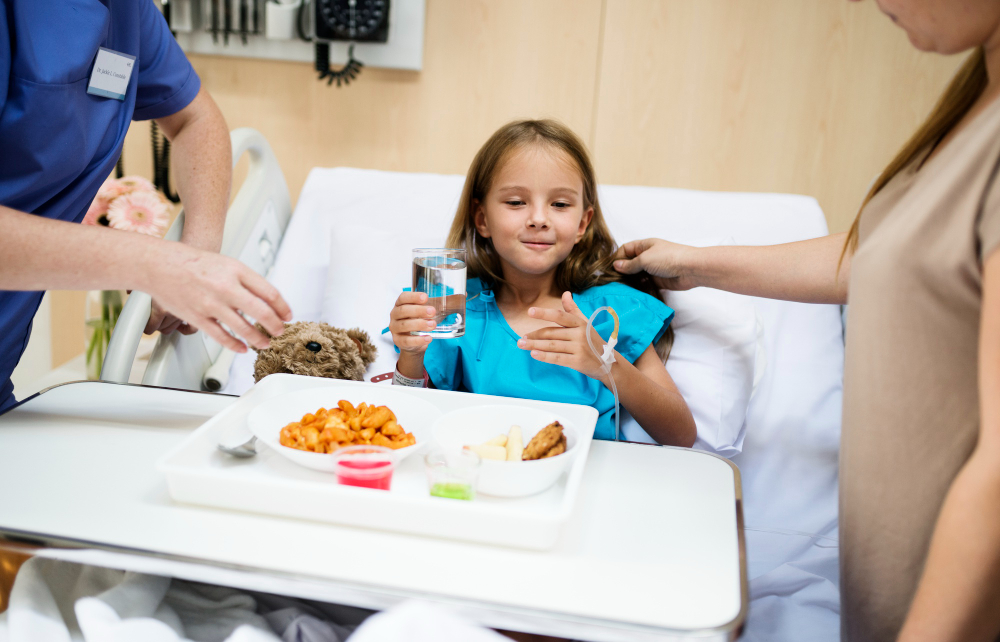
When Shaurya was first brought to hospital, his mother Jyoti didn’t know where to start. The doctors told her what medicine he needed. Nobody told her what to feed him. It was only when the Cuddles Foundation team stepped in that she felt, for the first time, like someone was truly guiding them. Telling them what was good for his body, providing nutritional supplements, monthly rations, and a diet plan that was built specifically around Shaurya’s needs.
That experience of care that is personal and not generic is at the heart of what good paediatric cancer nutrition actually looks like. And the clinical evidence increasingly shows that personalisation isn’t just a nice-to-have. It can be the difference between a child completing treatment and one who doesn’t.
Why One-Size Doesn’t Work in Paediatric Cancer Nutrition
Children with cancer are not a uniform group. A three-year-old with leukaemia has entirely different nutritional needs from a twelve-year-old with a solid tumour. A child undergoing bone marrow transplant faces different challenges from one receiving oral chemotherapy. A child who arrived at hospital already malnourished needs a very different intervention from one who arrived well-nourished.
A 2022 review published in Diagnostics reported that both under-nourished and over-nourished children at the time of cancer diagnosis had worse overall survival and event-free survival, with the risk of death and relapse increasing by 30–50% among children with leukaemia who had a higher Body Mass Index at diagnosis. The authors concluded that nutritional status represents a significant, modifiable prognostic tool in childhood cancer management; but only if assessed and addressed individually.
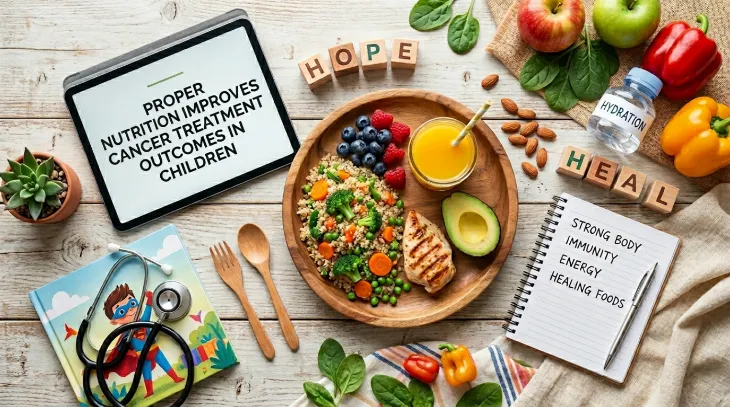
A 2024 consensus statement published in Nutrients by the Polish Society for Clinical Nutrition of Children, developed using the Delphi method with paediatric oncology specialists, was direct: nutritional treatment should be an integral component of medical care for paediatric patients with malignancies, and should begin with individualised baseline assessment. The statement noted that proper nutrition is associated with better treatment outcomes and tolerance of chemotherapy, helps alleviate side effects, and significantly impacts physical, motor, cognitive, and neurological development.
What Personalised Assessment Looks Like in Practice
At Cuddles Foundation, the FoodHeals Program doesn’t apply a standard diet to all children. Every child entering a partner hospital is screened individually for nutritional status (using MUAC (mid-upper arm circumference) and BMI measurements) and a diet plan is prescribed that accounts for their specific cancer type, treatment protocol, and the side effects that are affecting their ability to eat.
Dr. Nita Radhakrishnan, Additional Professor and Head of Department at PGICH Hospital, Noida, puts it plainly: many children who come in are already nutritionally vulnerable, and chemotherapy, infections, and treatment make their needs even greater. Ensuring access to good-quality, adequate food is as important as providing chemotherapy and other life-saving therapies. Regular nutritional monitoring and early support are not optional but essential parts of care.
This is particularly true for children undergoing bone marrow transplants, where the intensity of treatment, mouth sores, infections, and long hospital stays can make eating extremely difficult. Without close monitoring and early intervention, nutritional status can deteriorate rapidly and quickly become a clinical emergency.
The Pharmacokinetics Argument:Why Nutrition Affects How Medicine Works
There is a clinical argument for personalised nutritional care that goes beyond calories and weight. An undernourished state causes major metabolic changes, including decreased plasma protein levels that affect cardiac, hepatic, and renal function, and in turn alter how chemotherapy drugs are absorbed, distributed, metabolised, and eliminated by the body.
A 2023 systematic review published in Pediatric Blood & Cancer (Schoon et al.) examined the effect of undernutrition on the pharmacokinetics of chemotherapy in children with cancer. The authors reported that in undernourished children, the mean clearance rates of chemotherapy drugs such as vincristine (statistically significant) and methotrexate, doxorubicin, and etoposide (not statistically significant) were lower compared to well-nourished children.
Given that chemotherapy drugs have a narrow therapeutic index, meaning the difference between an effective dose and a toxic dose is very small. Even slight changes in how the body absorbs, processes, or eliminates these drugs can affect their safety and effectiveness. If drug levels become too high, severe side effects may occur, while levels that are too low may reduce treatment effectiveness.
In other words, a child’s nutritional status doesn’t just affect whether they feel strong enough to receive treatment. It affects whether the treatment actually works the way it is supposed to.
Although the impact is not known, a 2024 systematic review published in the British Journal of Cancer by the SIOP Nutrition Network found relevant pharmacokinetic variations across multiple chemotherapeutic agents including methotrexate, vincristine, and busulfan in relation to malnutrition.
The conclusion therefore across the evidence is consistent: nutritional status changes how medicine behaves inside the body, and personalised nutritional monitoring is therefore a clinical necessity, not a supplementary service.
Monitoring That Doesn’t Stop
What makes the FoodHeals Program different from a one-time dietary assessment is that it follows the child. Nutritional plans are continuously monitored and reassessed. If a child’s status deteriorates because of a new infection, a particularly difficult round of chemotherapy, or a prolonged hospital stay, the plan is updated before the deterioration becomes a crisis.
Cuddles Foundation’s 2025-26 Impact Report shows that among children who entered the programme, 81% improved or maintained their nutritional status despite undergoing chemotherapy or radiation. Undernourishment dropped 25% from arrival to the end of treatment. These are not outcomes achieved by handing families a printed diet sheet. They are the result of continuous, personalised clinical care.
What to Look For
For families and donors evaluating cancer NGOs in Mumbai and across India, the question to ask is whether nutrition support is personalised and monitored, or whether it is standardised and static. The evidence is clear that only the former translates into meaningfully better outcomes.
Since 2013, Cuddles Foundation has been delivering exactly that — inside hospitals, alongside oncologists, as part of the care team.
Support personalised nutrition care for children with cancer. Donate to Cuddles Foundation today.