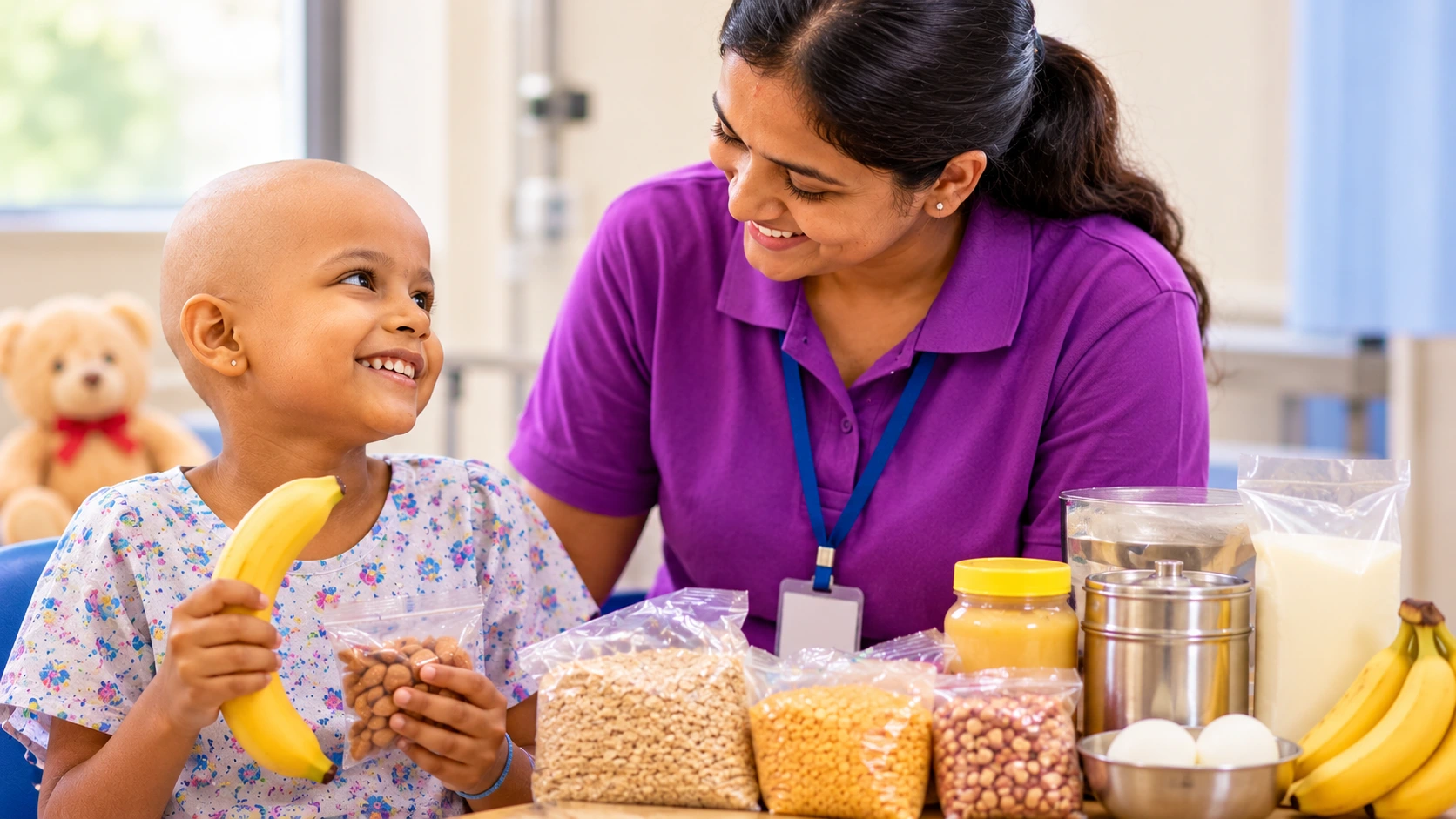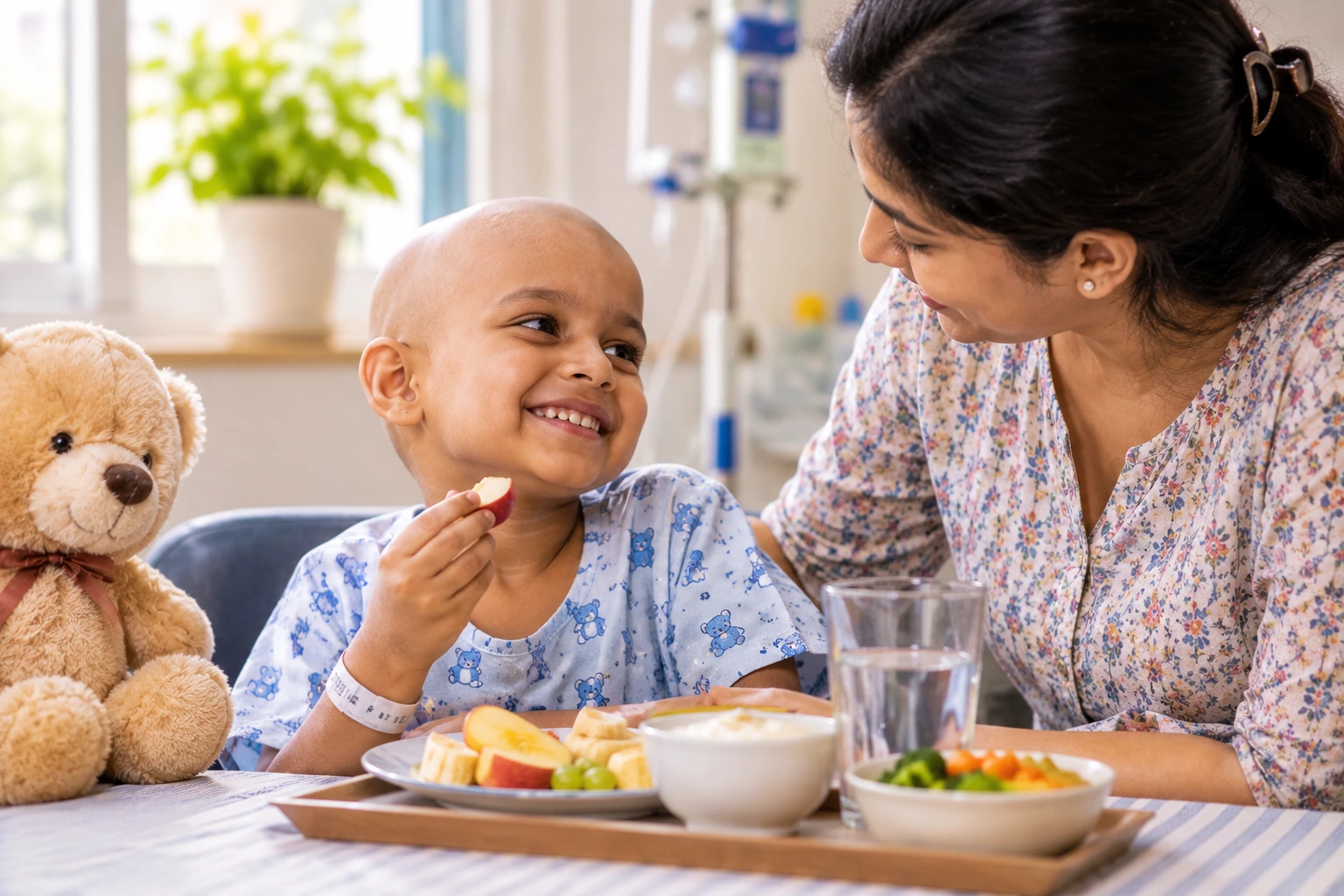


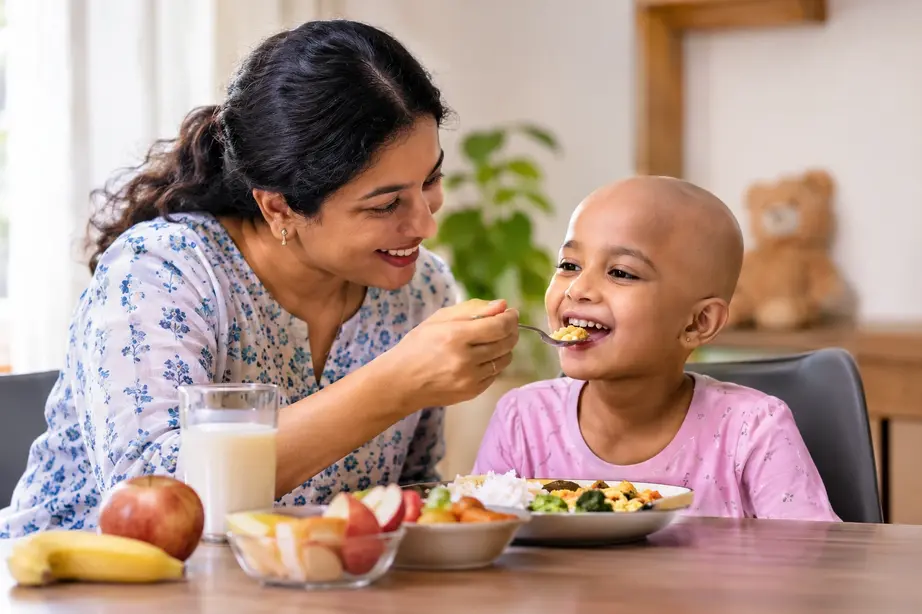
When your child is diagnosed with cancer, food can suddenly become a source of worry for the entire family. Your child may have once enjoyed their favourite meals, but now refuses to eat, takes only a few bites or complains that everything tastes different. You may find yourself wondering what to cook, how much to offer and whether your child is getting enough nutrition.
If this sounds familiar, remember that you are not alone. Feeding your child during cancer treatment can be challenging, but understanding their nutritional needs can help you make informed choices and feel more confident along the way.
Nutrition is not just about making sure your child finishes every meal. It is about supporting their growth, development and recovery throughout cancer treatment.
Your child’s nutritional needs also change as they grow. An infant needs very different nourishment from a school-going child or a teenager. Let’s understand what you can do at each stage to support your child’s nutrition and make mealtimes a little easier.
Why is Nutrition Important During your Child’s Cancer Treatment?
Even during cancer treatment, your child continues to grow and develop. Their body needs adequate energy, protein, vitamins, minerals and fluids to support growth, maintain muscle, repair tissues and cope with the demands of treatment.
However, cancer and its treatment can make eating difficult. Your child may experience nausea, vomiting, mouth sores (mucositis), constipation, diarrhoea, changes in taste or loss of appetite. Foods they once enjoyed may no longer appeal to them.
If your child is eating poorly for a prolonged period, it can affect their weight, nutritional status, muscle strength and growth. This is why nutrition care should begin at diagnosis and continue throughout treatment and beyond.
1. Infants (0–12 months): When Every Feed Counts
If your baby is undergoing cancer treatment, feeding can be particularly worrying. The first year of life is a period of rapid growth, and adequate nutrition is essential for your baby’s development.
Breast milk or infant formula remains the primary source of nutrition during this stage. If you are breastfeeding, continue as advised by your baby’s treating team. If your baby is finding it difficult to feed, offering smaller, more frequent feeds may help.
If your baby has already started complementary feeding, you can offer age-appropriate foods such as mashed dal, soft khichdi, pureed vegetables and mashed banana.
How can you Help your Baby?
- Offer breast milk or formula frequently, according to your baby’s needs and medical advice.
- Continue complementary foods appropriate for your baby’s developmental stage.
- If your baby is eating less, speak to the nutritionist or the medical team as to ways to improve the nutritional value of feeds.
- Watch for signs of dehydration, such as fewer wet diapers, a dry mouth or unusual irritability.
You may be tempted to introduce new foods to improve your baby’s intake, but it is best to discuss feeding changes with your healthcare team, particularly when treatment-related side effects make feeding difficult.
2. Toddlers and Preschoolers (1–5 years): Making Food Familiar and Enjoyable
Does your little one suddenly refuse dal and rice, even though it was their favourite meal? Or do they insist on eating only curd rice, bananas or one particular snack?
Toddlers are often fussy eaters, and cancer treatment can make this even more challenging. At this age, your child is learning to explore food, develop preferences and become independent. Keeping mealtimes relaxed can make a big difference.
How can you make Mealtimes Easier?
- Offer small, frequent meals rather than expecting your child to finish three large meals.
- Include familiar foods such as idli, dosa, soft khichdi, curd rice, mashed potatoes and dal.
- Add nutritional value to foods your child already enjoys using milk powder, ghee, curd or paneer, as appropriate.
- Make food appealing with different shapes, colours and textures when your child is interested.
- Let your child choose between two food options rather than insisting on a particular meal.
If your child has a poor appetite, don’t worry about getting them to finish a full plate. A few spoonfuls at a time can be a starting point. Try to avoid force-feeding, as this can make mealtimes stressful for both of you.
3. School-Going Children (6–12 years): Supporting Growth, Energy and Activity
Your school-going child needs adequate nutrition to support physical growth, learning, concentration and everyday activities. Cancer treatment may interrupt their usual routine, affect their appetite and reduce their interest in playing or spending time with friends.
At this age, your child may also notice that their eating habits are different from those of their siblings or classmates. You can help by keeping meals familiar and involving them in simple food-related decisions and even preparation.
How can you Support your Child’s Nutrition?
- Include protein-rich foods such as dal, milk, curd, paneer, eggs, fish or chicken, depending on your child’s preferences and tolerance.
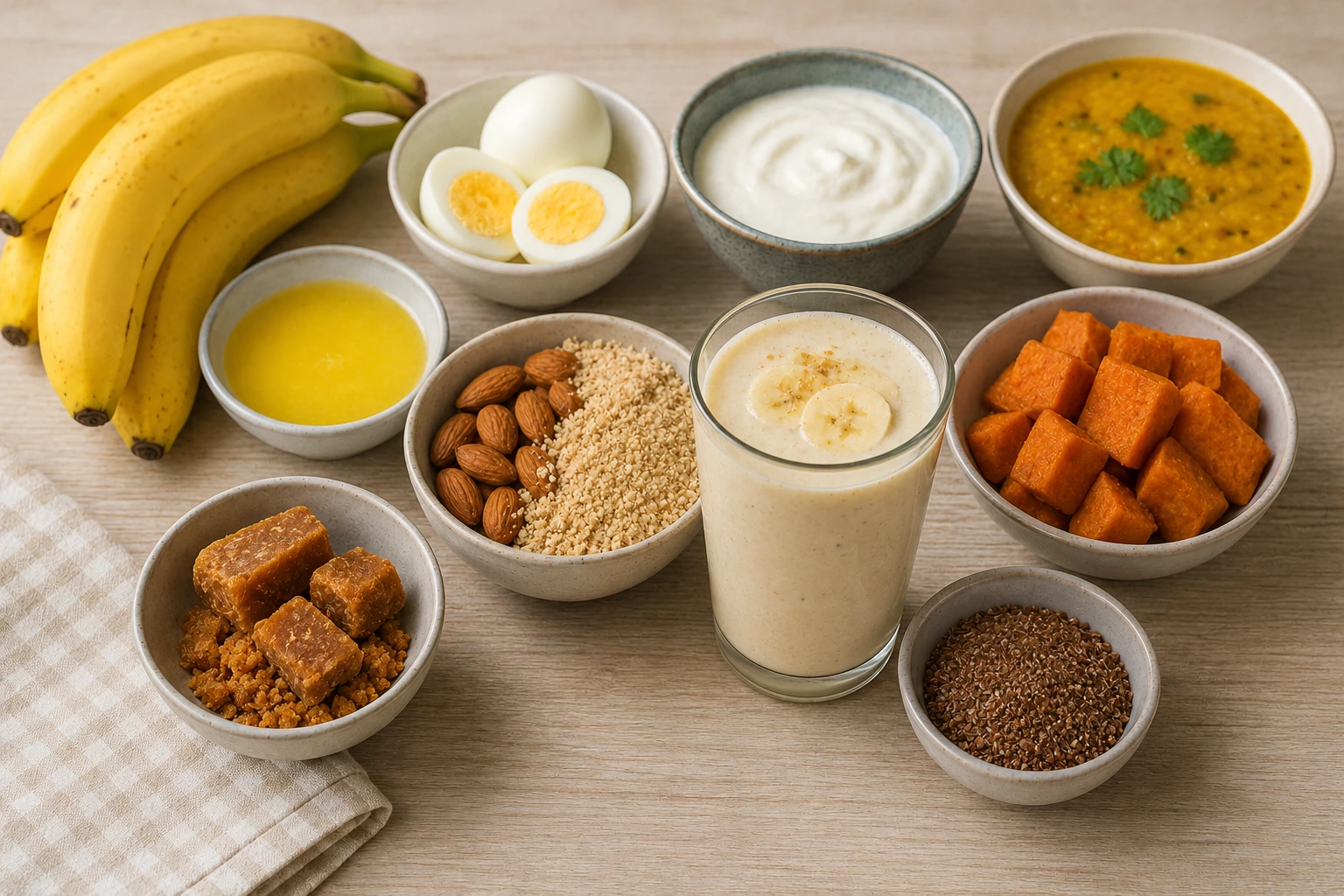
- Offer nutritious, energy-rich snacks such as homemade laddoos, banana shakes, paneer sandwiches or egg preparations, as appropriate.
- Encourage your child to drink fluids regularly throughout the day.
- If your child has mouth sores, offer soft, moist foods that are not too hot, spicy or acidic.
- Allow your child to eat when they feel most comfortable rather than insisting on rigid meal timings.
If your child’s energy levels permit, encourage some light play or physical activity with the treating team’s advice. Even small opportunities to move and play can help maintain activity and may support appetite.
4. Adolescents (13–18 years): Balancing Nutrition, Growth and Independence
- If you have a teenager undergoing cancer treatment, you may notice changes in their appetite, weight, food preferences and body image. Adolescence is already a period of rapid physical growth, hormonal changes and increasing nutritional requirements. Treatment can make this stage even more complicated.
- Some teenagers may gain weight, particularly with certain medications, while others may lose weight or muscle mass. They may also feel uncomfortable about changes in their appearance or become frustrated with restrictions around food.
How can you Support your Teenager? - Encourage balanced meals that provide adequate protein, carbohydrates and healthy fats.
- Include familiar Indian foods such as dal, roti, rice, eggs, paneer, fish, chicken, vegetables and fruit.
- Offer nutritious snacks between meals to help meet their energy requirements.
- Involve your teenager in meal planning and food preparation so they feel more in control.
- Avoid making negative comments about weight changes or comparing their eating habits with those of other children.
Most importantly, talk to your teenager rather than making every food decision for them. Giving them some independence and involving them in decisions can make it easier to maintain healthy eating habits during treatment.
Simple Nutrition Tips you Can Follow at Every Age:
Whatever your child’s age, a few everyday practices can help you manage nutritional challenges during cancer treatment.
- Offer smaller, frequent meals: If your child cannot manage a full meal, try offering smaller portions and snacks at regular intervals.
- Make every bite count: When appetite is poor, add suitable sources of energy and protein to foods your child already enjoys.
- Adapt food to treatment side effects: Change the consistency, temperature and flavour of meals depending on whether your child experiences nausea, mouth sores, constipation or diarrhoea.
- Pay attention to food safety: Wash your hands, use clean utensils, cook foods thoroughly and follow the hospital’s food safety advice, particularly when your child’s immunity is low.
- Keep track of your child’s growth: Regular monitoring of weight, height and nutritional status can help identify nutritional problems early.
Nutrition is Care, One Meal at a Time
There is no single diet that works for every child with cancer. Your child’s nutritional requirements depend on their age, diagnosis, treatment protocol, nutritional status and the side effects they experience. Your child’s treating team and a qualified paediatric oncology nutritionist can help determine what is appropriate.
As a parent or caregiver, you may have days when your child eats well and others when even a few bites feel like an achievement. Please remember that every meal does not have to be perfect. What matters is recognising your child’s changing needs and getting the right support when you need it.
At Cuddles Foundation, we understand that looking after your child’s nutrition during cancer treatment can be overwhelming. We believe that nutrition is an essential part of childhood cancer care. With individualised nutrition support, practical guidance and your involvement, we can work together to help your child stay nourished through treatment and beyond.
Cuddles Foundation’s FoodHeals Program places trained paediatric oncology nutritionists inside hospitals across India at no cost to families. Ask your oncologist about a referral.
Donate to help more children get the nutrition support they need.