

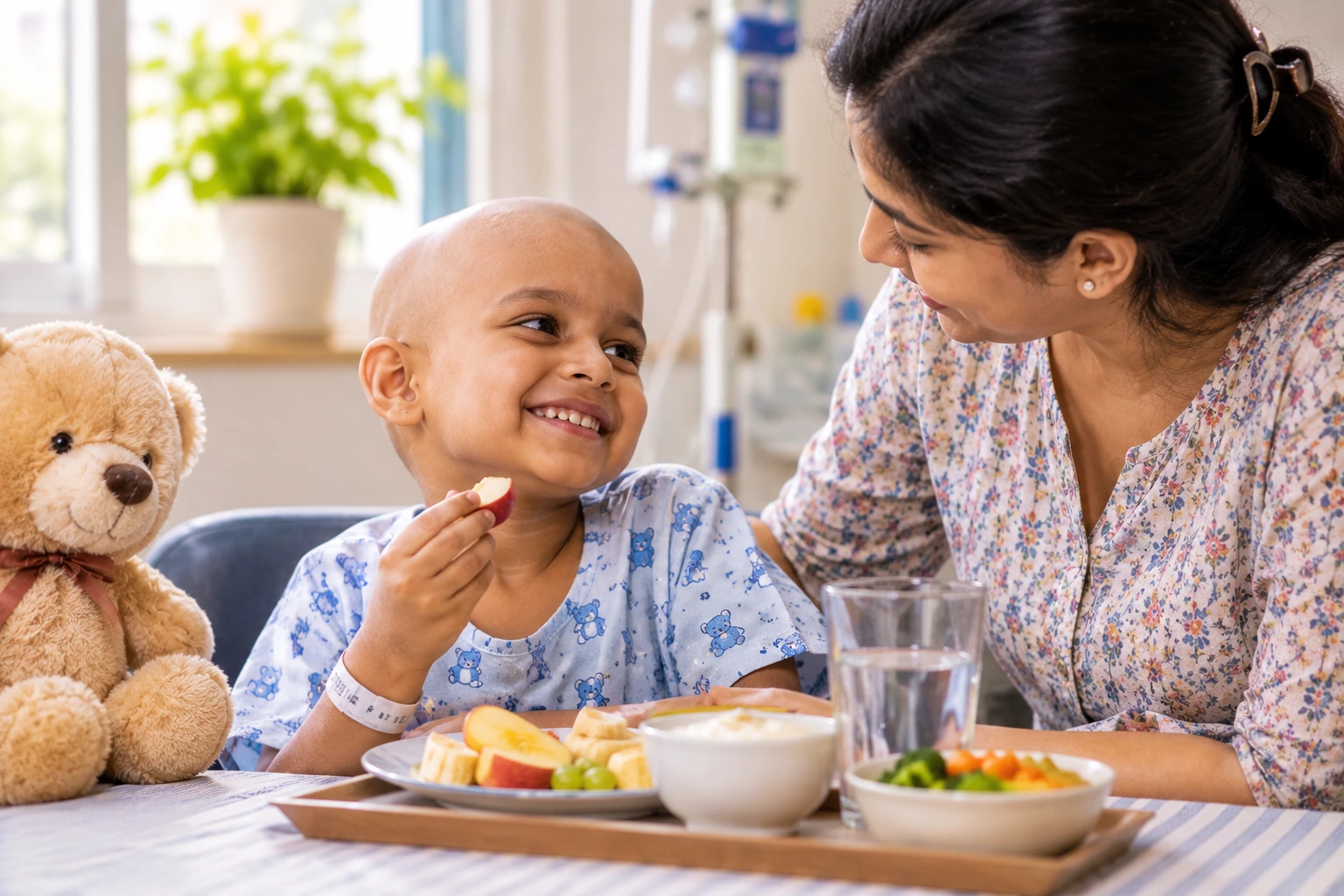
A bone marrow transplant asks a lot of a child’s body, and of the people who love them. Food can feel like one of the few things you can actually do. This guide explains what to expect and what the evidence says. Your transplant team’s instructions always come first.
Is there a Food that Builds Bone Marrow?
Many families search for “bone marrow foods”. There isn’t one. New marrow grows from the donated stem cells. What food can do is help your child stay strong, nourished and safe while that happens.
Why Eating Gets Hard
The chemotherapy and radiation that prepare the body for transplant often cause mouth sores, nausea, vomiting, diarrhoea and taste changes. Eating less is common, and it matters: malnutrition around transplant is linked to more complications. That’s why consensus recommends intensive nutritional monitoring for every child having a transplant.
What your Team May Do
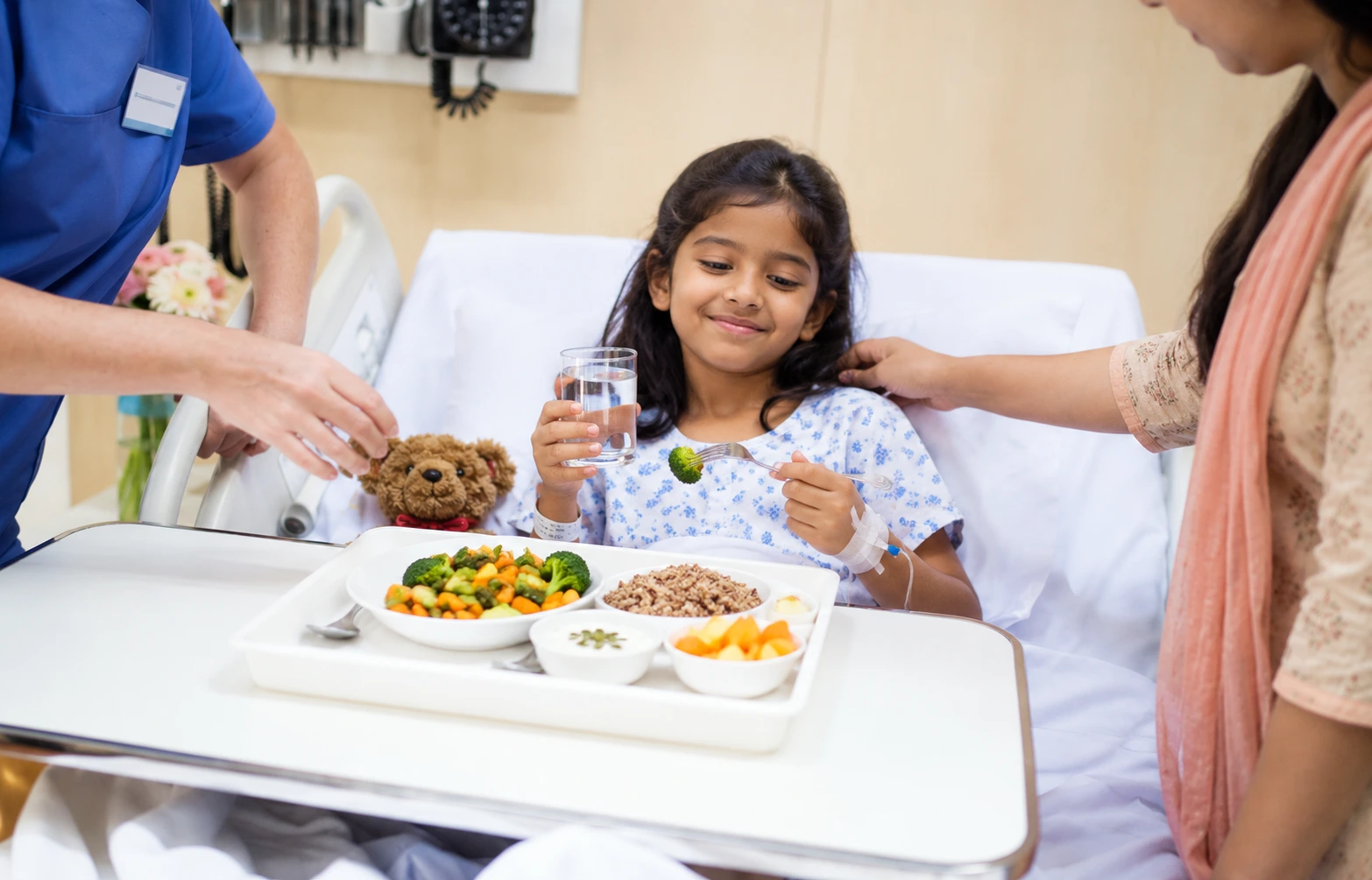
If eating drops, the team may suggest a feeding tube through the nose, sometimes before it becomes a problem. Tube feeding is generally preferred whenever the gut is working. If severe mouth sores, heavy diarrhoea or gut graft-versus-host disease stop the gut coping, IV nutrition can step in, often alongside small tube feeds to keep the gut active. These are treatments, not failures. Protein needs rise after transplant, usually to 1.2–2.5 g per kg of body weight a day. The nutritionist works out the exact number.
Food Safety: What the Evidence Says
Children after transplant are very vulnerable to infection, so food safety matters. For years, many centres used strict “neutropenic diets” that ban many raw foods. Research suggests strict lists don’t protect better than good food-safety habits. Strict diets also tend to shrink what children are willing to eat.
Consensus now favours strict hygiene over routine neutropenic diets, with low-bacterial diets favoured initially for a few days after a donor transplant. Practice still differs between centres, so follow your team’s written list first. In the meantime, these habits apply to everyone:
- Clean: wash hands and surfaces often.
- Separate: keep raw and cooked foods apart.
- Cook: cook eggs, meat and fish thoroughly.
- Chill: refrigerate leftovers promptly, and serve freshly cooked food.
- Avoid: unpasteurised milk and juice, raw honey, and raw or undercooked eggs, meat and fish.
- Wash fruit and vegetables under running water. Ask your team as to when you can eat raw fruits and vegetables or how to cook these. Instructions may change depending on your child’s blood counts and where your child is in the transplant journey.
Making Eating Easier
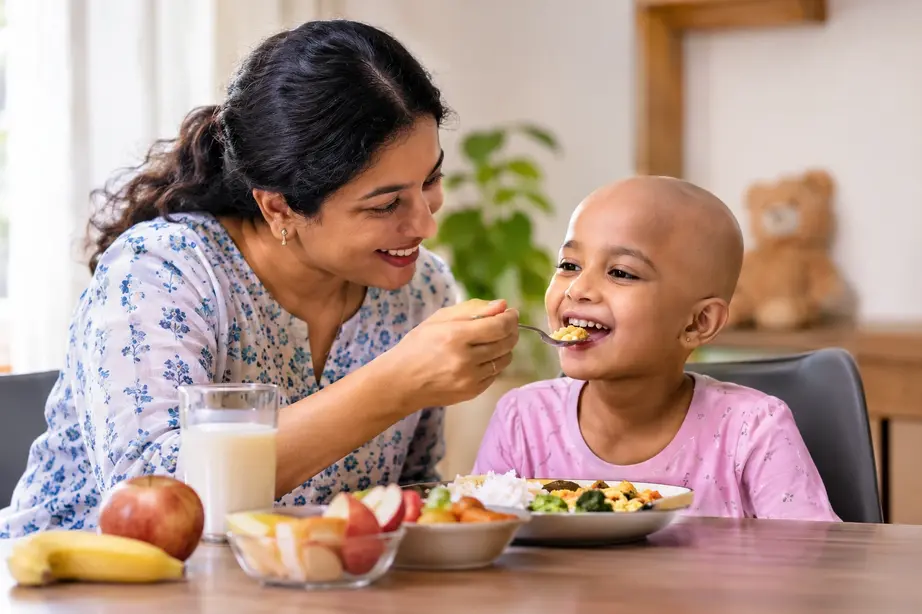
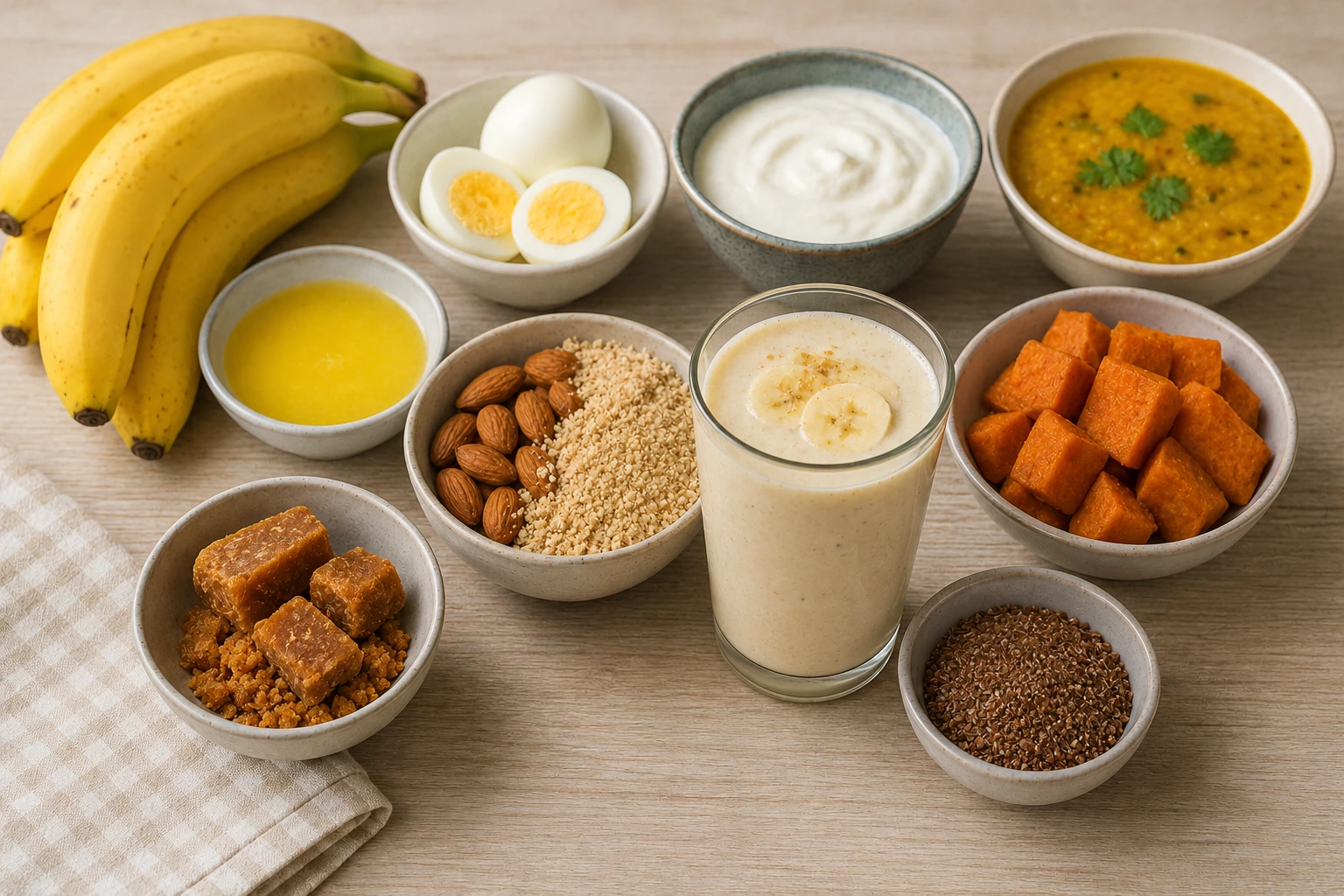
Offer small portions often. Soft, cold or room-temperature foods are kinder to sore mouths (our mucositis research review looks at what helps). Stir ghee or ground nuts into whatever your child accepts, and offer sips of fluid between meals rather than with them. If your child eats less than about half of what they need for several days, tell the team. That’s the point at which supplements or tube feeding are usually considered. For more ideas, see our guide on appetite loss.
Bones and the Road Ahead
Children after transplant are at higher risk of weaker bones, because of conditioning treatment, steroids for graft-versus-host disease, less activity and low vitamin D. Teams usually check vitamin D, calcium and phosphate and adjust supplements to the results. Milk, curd and ragi are good everyday calcium sources. Please don’t start supplements on your own.
Questions to Ask your Nutritionist/Medical Team:
- Which food restrictions apply now, and until when?
- At what point would you consider nutrition supplements or feeding via a tube?
- Should we check vitamin D and calcium?
- Who do we call if he or she stops eating?
You don’t have to work this out alone. Cuddles Foundation, an NGO in Mumbai, places paediatric oncology nutritionists in 51 hospitals across 18 states and 31 cities, with food and nutrition support free for families. Ask your team whether one is at your hospital.
Support a child through transplant. Donate to Cuddles Foundation.