

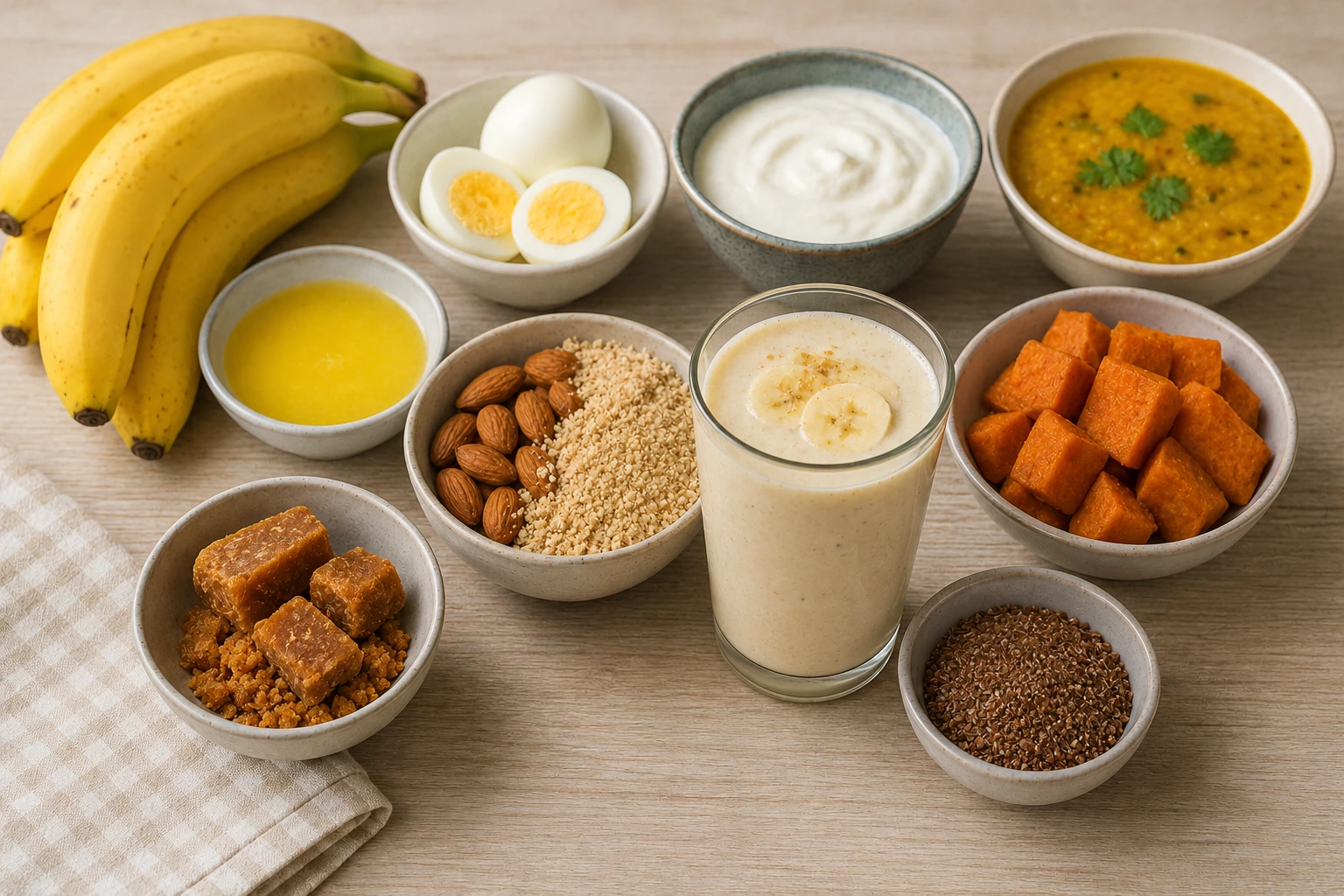
A child’s cancer nutrition plan doesn’t need special foods. It needs the everyday food groups Indian families already know, used with a different goal: enough energy, enough protein, and food a child can manage on a hard day.
India’s national dietary guidelines (ICMR-NIN, 2024) build a balanced diet from cereals and millets, pulses and animal protein, nuts and oilseeds, milk and milk products, and vegetables and fruits. Those guidelines are written for healthy children. During treatment the emphasis shifts, because appetite falls while the body’s demands rise. Paediatric oncology consensus advises against energy-restricted diets and recommends fortifying food with extra energy and protein instead.
1. Cereals and Millets:
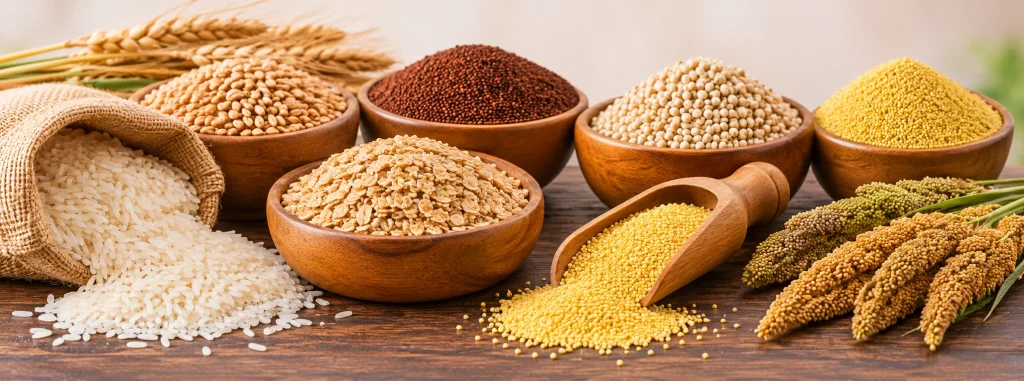
The energy base. Rice, wheat, ragi, jowar and bajra supply most of a child’s energy. Indian guidance suggests that about a fifth of cereals (by raw weight) for children up to 10 come from millets. Soft khichdi, ragi porridge and thin dalia are easy starting points. On low-appetite days, a small portion of something familiar beats a large portion of something “healthy”.
2. Pulses, Eggs and Meat:
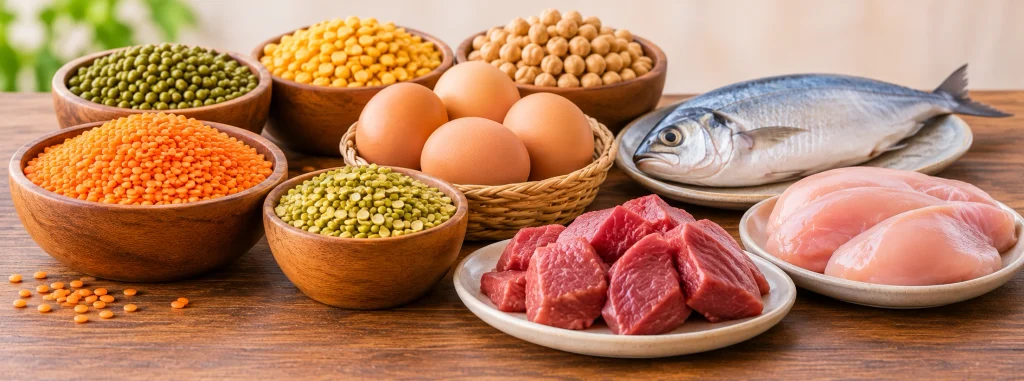
Protein. Protein repairs tissue and supports immunity. For children on standard treatment, consensus puts protein at 1.0–1.5 g per kg of body weight a day, and higher for children who are significantly malnourished or having a transplant. Your nutritionist sets the target. Thin dal, moong, soft scrambled eggs, fish or chicken (if your family eats them) all count. Cook eggs, fish and meat thoroughly.
3. Milk and Milk Products:
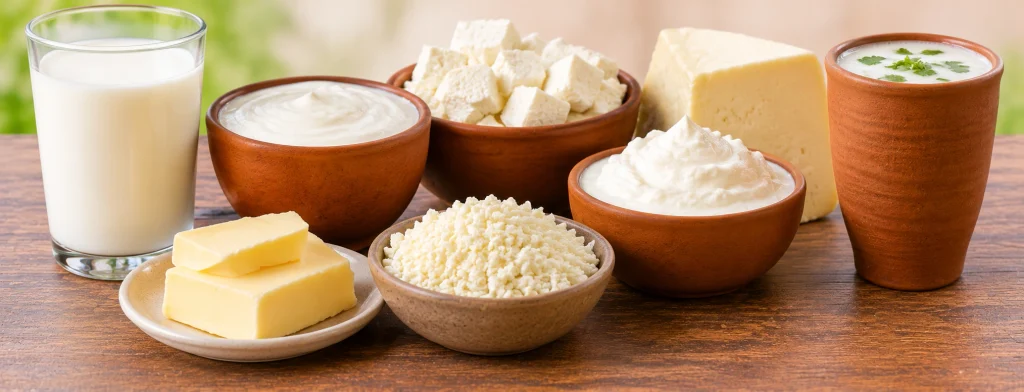
Protein, calcium and energy. Calcium matters more than usual during treatment. Steroids can weaken bones, and vitamin D deficiency is relatively common in children with cancer. Milk, curd, buttermilk and paneer all help. Use pasteurised products only. Full-fat versions add energy, so ask your team which to choose.
4. Vegetables and Fruits:
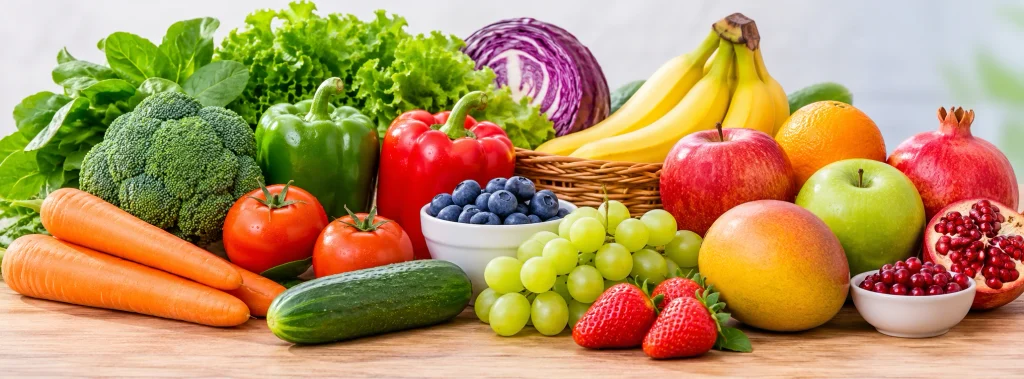
Vitamins, minerals and fibre. Wash all produce under running water. Whether raw produce is fine right now depends on your child’s blood counts, so follow your team’s advice. Soft-cooked vegetables, mashed banana and stewed apple work well for sore mouths. One caution: dal and leafy vegetables contain natural folate and are fine, but folic acid supplements can interfere with methotrexate, so give them only if the oncologist prescribes them. Avoid multivitamin and multimineral supplements unless explicitly prescribed by your medical team.
5. Nuts, Oilseeds, Ghee and Oils:
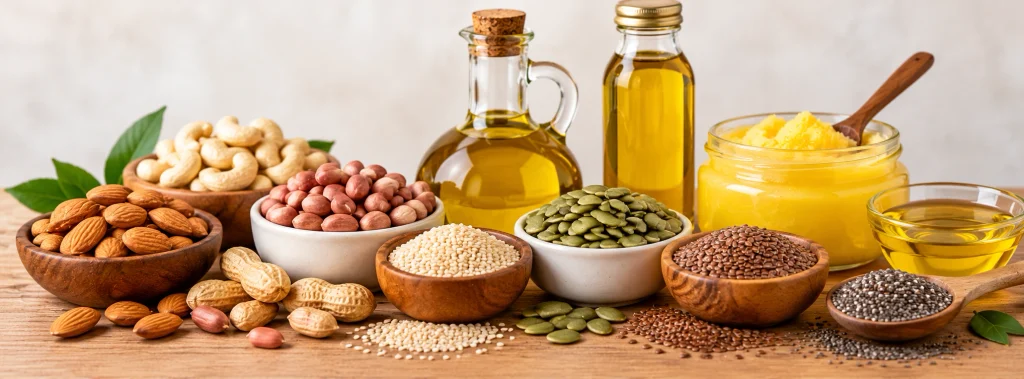
Compact calories. A teaspoon of ghee adds about 45 calories without adding volume. Roasted and ground almonds, groundnuts, sesame and flaxseed can be stirred into porridge, khichdi, dal or milk. Use them ground, not whole, for young children. Consensus also notes that nutrient-dense traditional foods and home-prepared supplements can work well where cost or culture limit other options.
Putting the groups together with protein in the center. Aim for two or three groups in each small meal. Ragi porridge made with milk and ground almonds covers three. Khichdi with ghee and curd covers four. But make sure that every meal is built around a protein source.
When food alone isn’t enough. If a child can’t reach about half of their needs through food, even fortified food, consensus recommends starting oral nutritional supplements rather than waiting. A nutritionist can tell you when that point has arrived.
The monthly ration bundle that Cuddles Foundation gives families follows the same logic: cereals, pulses, millets, nuts, oilseeds, ghee, oil, spices and condiments. Cuddles Foundation is an NGO in Mumbai whose nutritionists work in 51 hospitals across 18 states, building plans around what each child can eat.
Help a child eat well through treatment. Donate to Cuddles Foundation.