

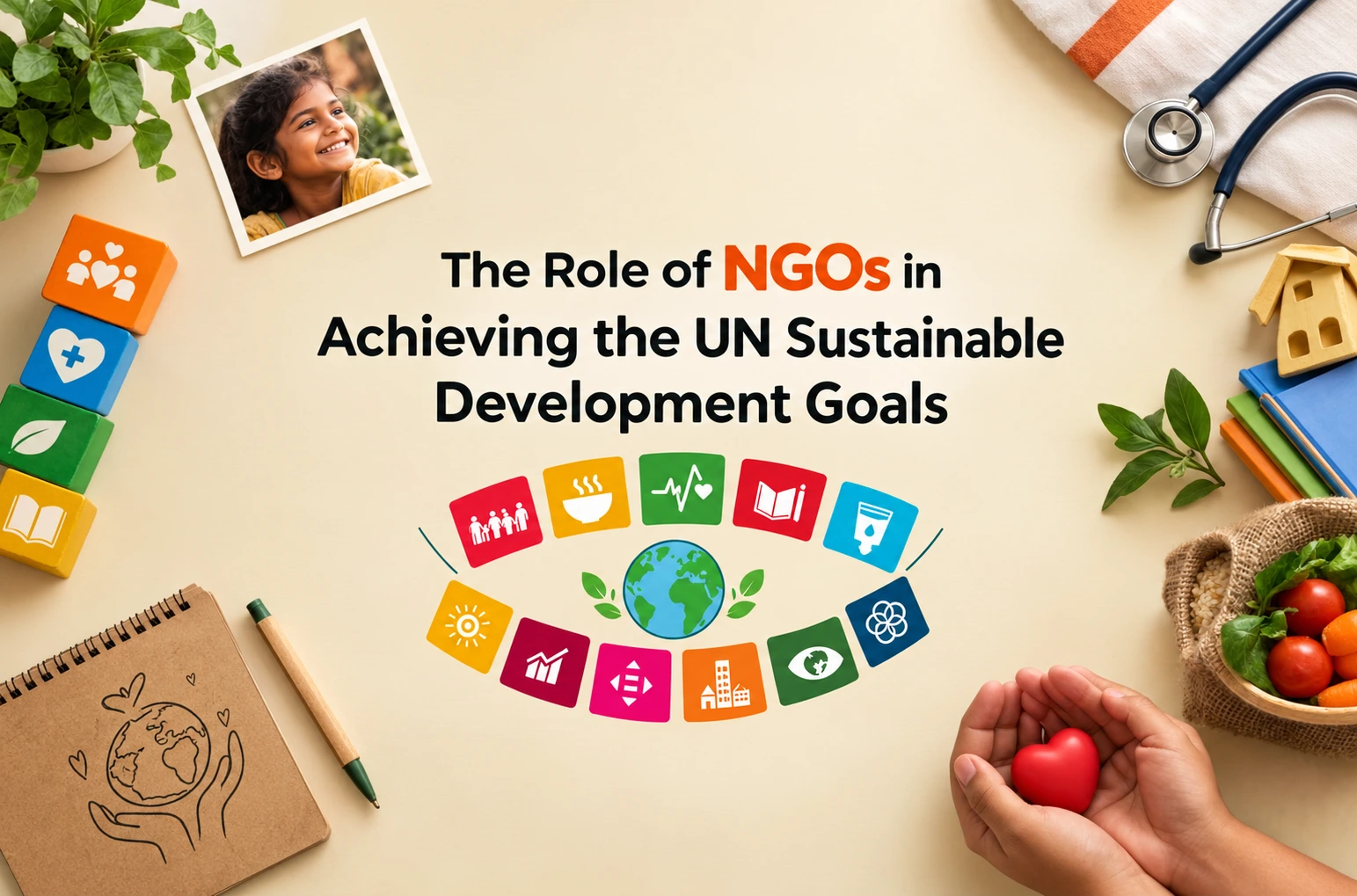
When world leaders adopted the 17 Sustainable Development Goals in 2015, they established an ambitious global agenda for governments. Yet achieving these goals cannot be the responsibility of governments alone. Experience from around the world, and across India, shows that the gap between policy intent and real impact on the ground is often bridged by well-run NGOs. They play a critical role in translating government ambitions into meaningful outcomes, ensuring that support reaches those who need it most – including a child lying in a hospital bed.
What the SDGs Say About Health and Nutrition
SDG 3 — Good Health and Well-Being — calls for ensuring healthy lives and promoting well-being for all at all ages. SDG 2 — Zero Hunger — calls for ending hunger, achieving food security, and improving nutrition. These two goals are deeply interconnected. As a 2025 editorial published in Frontiers in Nutrition (Mathews et al., PMC) noted, nutrition is deeply interconnected with at least 12 of the 17 SDGs and is crucial for achieving them.
For childhood cancer specifically, the failure to provide adequate nutrition during treatment touches multiple SDGs simultaneously and the connections are grounded in evidence, not just aspiration.
It is a poverty problem (SDG 1 — No Poverty): catastrophic illness costs push already vulnerable families deeper into poverty. An independent SROI assessment by Crisil Intelligence found that families supported by Cuddles Foundation’s FoodHeals™ Program saw a 31% reduction in out-of-pocket nutrition costs, and an average monthly saving of ₹8,000 — critical relief for households earning under ₹20,000 a month. Financial protection from catastrophic illness is a direct poverty intervention.
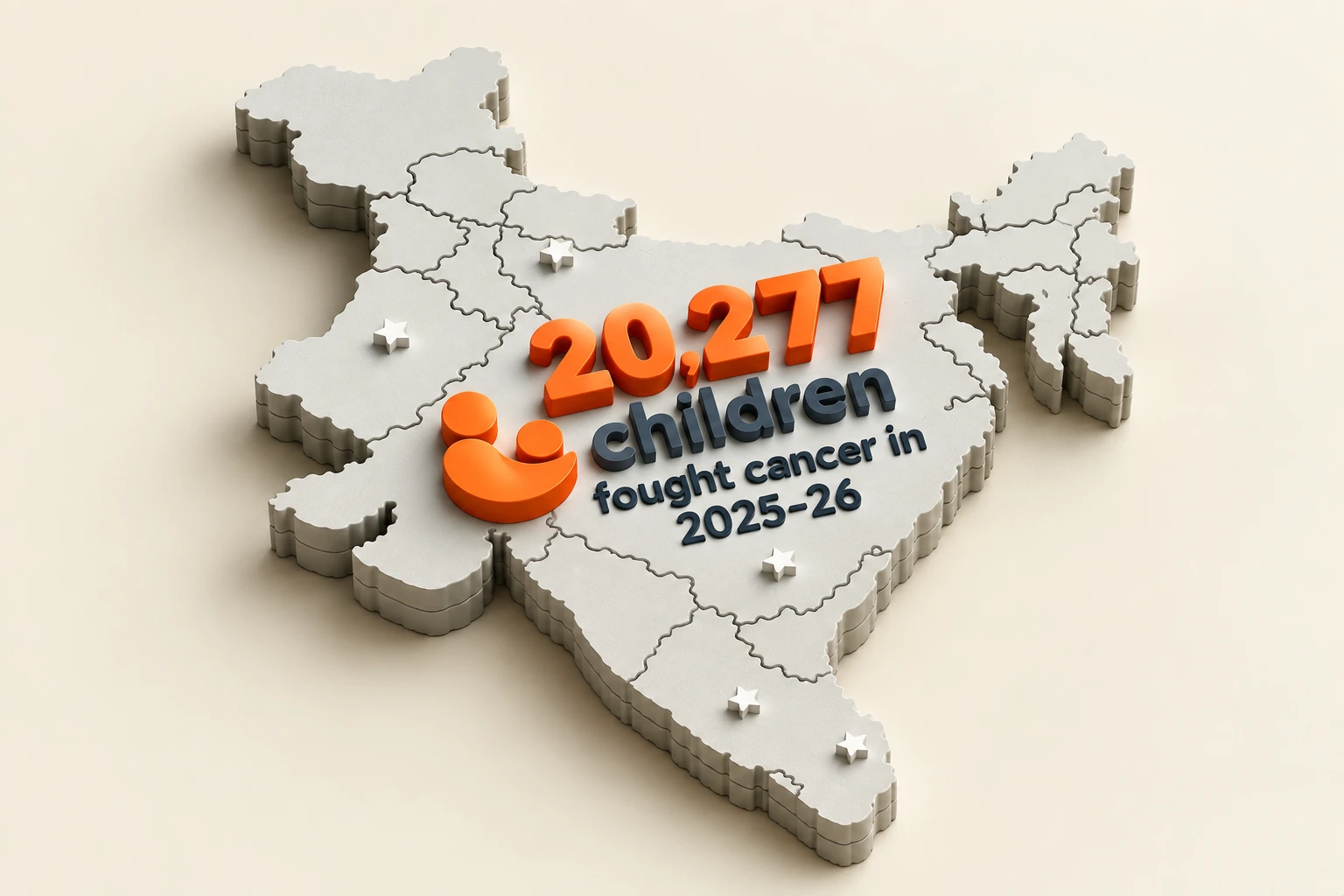
It is a hunger problem (SDG 2 — Zero Hunger): For children fighting cancer in India, food insecurity precedes the diagnosis itself. Cuddles Foundation’s 2022 food insecurity study found that 82% of children enrolled in FoodHeals™ had been at risk of food insecurity in the year before their cancer was even detected and more than half their families earned under ₹10,000 a month. Cancer treatment then compounds an already fragile situation: the FoodHeals™ Report 2024 found that 65% of newly diagnosed children consume less than half the daily calories they need. In 2025-26, FoodHeals™ distributed 1,543,000 in-meals, 85,000 hot meals, and 24,000 ration bundles — a direct intervention in a documented nutritional emergency.
It is a health problem (SDG 3 — Good Health and Well-Being): 96% of children with nutrition support stayed on their treatment plan. 81% improved or maintained their nutritional status despite chemotherapy or radiation. 77% returned to school after completing treatment, the most concrete possible sign of restored health and well-being.
It is an inequality problem (SDG 10 — Reduced Inequalities): the gap in cancer survival rates between children from low-income countries and higher-income countries is not primarily a medical gap — it is a resource gap. Children who can afford adequate nutrition during treatment tolerate chemotherapy better, complete more of their protocol, and survive at higher rates. By embedding free, clinical nutrition support inside government and charity cancer hospitals, Cuddles Foundation directly reduces that gap.
How Cuddles Foundation Maps to the SDGs
Cuddles Foundation’s 2025-26 Impact Report explicitly maps the FoodHeals™ Program’s work to these SDGs — a framework that reflects the organisation’s understanding that nutrition in cancer care is not a single-issue intervention. It operates across poverty, hunger, health, economic resilience, and equity simultaneously.
This is also what makes it a particularly compelling vehicle for corporate CSR investment. A partnership with Cuddles Foundation contributes to multiple SDGs with independently verified, measurable outcomes, the kind of evidence that satisfies both regulatory reporting requirements and the expectations of stakeholders who want to see real social returns on their investment.
Why NGOs are Irreplaceable in the SDG Framework
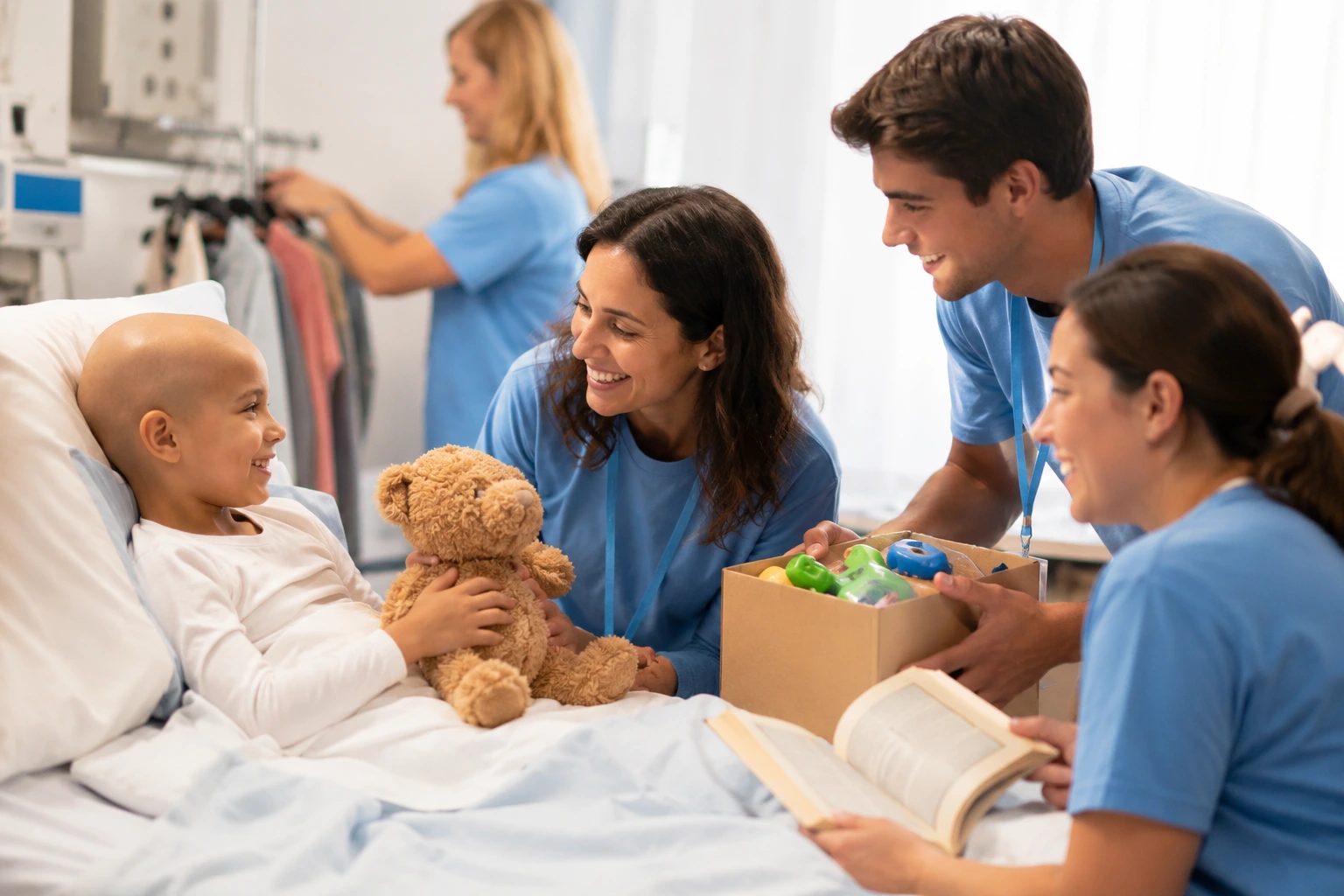
The UN itself has been clear that NGOs are not peripheral to the SDG agenda — they are central to it. Government programmes set the direction and the policy framework; NGOs deliver the last mile. For childhood cancer nutrition in India, that last mile is the nutritionist in the ward. The ration bundle that goes home. The counselling session that teaches a mother what to feed her child tomorrow morning.
Translated into SDG language: every donation to Cuddles Foundation is a contribution to SDGs 1, 2, 3, and 10 — with independently verified, published evidence of the outcomes behind each one.